
• Skip to primary navigation
  • Skip to main content
  • Skip to primary sidebar
  • Skip to footer
Planet Home

Planet Home

Culture Solutions

  • ECOSYSTEM
    • EAT
      • Food Security & Production
      • Land Stewardship
      • Ocean Stewardship
      • Health + Wellness
    • MAKE
      • Circular Economies
      • Green Manufacturing
      • Material Science
      • Regenerative Ecosystems
    • MOVE
      • Clean Transport
      • New Fuel Sources
      • Virtual Connections
      • Ecological Explorations
    • LIVE
      • Sustainable Communities
      • Biodiversity
      • Atmospheric Conditions
      • Renewable + Equitable Energy
  • VENTURE STUDIO
  • LABS
  • EVENTS
  • ARTICLES
    • Featured
    • Network
    • Press
  • Menu bars
  • COMPANY
  • VENTURE STUDIO
  • LABS
  • ABOUT
  • CONTACT
  • NETWORK
  • ECOSYSTEM
  • COMMUNITY
  • MEDIA
  • VIDEO
  • PHOTO
  • PRESS
  • Podcast
  • EVENTS
  • ALL
  • 2019 SUMMIT
  • 2017 SUMMIT
  • Terms of Use
  • Privacy Policy
  • Facebook
  • Instagram
  • LinkedIn
  • Pinterest
  • Twitter
  • YouTube

Sustainable Brands to Hold Racial Justice Virtual Event | Aug 18 – 19

Sustainable Brands to Hold Racial Justice Virtual Event | Aug 18 – 19

August 13, 2020 by Rayanne Piana Leave a Comment

With ongoing Black Lives Matter protests taking place in cities across the country, conversations around racial justice continue to take place.  Businesses in every industry are having conversations about ways they can deepen their efforts towards diversity, equity, and inclusion.  

Next week, from August 18 to 19, Sustainable Brands is hosting Just Brands, a virtual conference focused on unpacking racial justice and equity in business.

A Conference on Regenerative Racial Justice

Sustainable Brands is a global community of business leaders and practitioners committed to driving innovations that make a positive social and environmental impact.  Sustainable Brands believes in taking a regenerative approach to go past sustainability, going beyond “doing less harm” by taking conscious steps to leave the planet and society better off than we found it.  

Restorative justice, in the form of addressing racial biases and inequities in business practices, is an important factor in working towards a regenerative economy.  The Just Brands virtual event aims to help businesses, big and small, develop authentic, long-term commitments towards diversity, equity, and inclusion.

What To Expect

SB’2020 Just Brands will feature dialogues, trainings, breakout sessions, and remarks by leaders from companies such as PepsiCo, Impossible Foods, UPS, and more. Experts will be sharing their tried-and-true solutions for addressing systemic racial injustice and creating more inclusive, equitable workplace policies and behaviors.

The conference will cover the intersection between racial justice and a range of topics, including:

  • Hiring, compensation, and retention
  • Leadership training
  • Workplace biases
  • Purchasing, procurement, and supply chain
  • Brand positioning, marketing, and communications
  • Local community engagement
  • Civic engagement
  • Cultural evolution

The event will also include an exploration of case studies on companies who are leading the charge with cutting-edge work in racial justice and equity. Activism manager Christopher Miller of Ben & Jerry’s, the ice cream brand that made headlines earlier this year for their powerful Black Lives Matter statement, will be facilitating a session on Ben & Jerry’s proactive strategy in addressing social and environmental issues.

Whether you’re a small business owner or a member of a corporate diversity and inclusion committee, attending Just Brands is an opportunity to learn from leading industry change-makers and network with professionals from likeminded brands.

Click here to register for SB’20 Just Brands conference, taking place virtually from August 18 to August 19.
Filed Under: Live, Recent Tagged With: business, equity, events, racial justice, sustainability

Bill Nye Joins TikTok to Inspire a New Generation

August 4, 2020 by Rayanne Piana 94 Comments

Once upon a time, Bill Nye the Science Guy graced our television screens with a little bit of comedy and a whole lot of science. With Millennials and Gen Z increasingly turning away from traditional broadcast TV and towards online streaming and social media, entertainers are looking for new ways to connect with today’s viewers. 

How? For Bill Nye, this means bringing his talents to TikTok. TikTok, the popular video-sharing social media app, is a digital landscape of dance challenges, funny pet videos, and, now, science! 

Bill Nye the TikTok Guy

For those who grew up with Bill Nye the Science Guy, his new TikTok account stays true to all the things we’ve always loved about him. He’s breaking down scientific concepts in an easy and entertaining manner, all while making us laugh along the way. 

In a recent video, Nye took the opportunity to address the coronavirus pandemic by educating viewers on the importance of wearing a face mask. In the video, attempts to blow out a candle while wearing a mask, to illustrate how effectively a mask blocks air movement and thus prevents airborne particles from getting into your respiratory system.

“Wearing a face mask is literally a matter of life or death,” Bill said, “and when I say ‘literally,’ I mean literally.” 

Gen Z, who make up 60% of all TikTok users, now get to experience the education, entertainment, and inspiration we’ve enjoyed from our favorite science guy since the 90s.

@billnye

#WearAMask #LearnOnTikTok #TikTokPartner

♬ original sound – Bill Nye

An Advocate for the Planet and Beyond

What else is Bill Nye up to these days? Other than becoming a viral TikTok star, he’s CEO of The Planetary Society, the world’s largest space-interest non-profit that empowers advancements in space exploration.

Space exploration is just as much about understanding the universe as it is about understanding humanity’s unique place within it. Nye believes that learning more about space will help us reflect on the nature of our own existence and the importance of taking care of our Planet Home.

“If we were to discover evidence of life on another world such as Mars or Jupiter’s moon Europa, it would utterly change this world,” he said. “People everywhere would think hard about what it means to be a living thing and our responsibilities as stewards of our unique planetary home.”

If you’re looking to watch more Bill Nye, you can stream 3 reasons of Bill Nye Saves the World on Netflix. In the talk show, Nye teams up scientific experts with celebrities and entertainers like Karlie Kloss, Tyler the Creator, Derek Muller to discuss scientific concepts that touch our lives.

Among many other topics, the show explores issues that have an effect on our planet, like pollution, rising temperatures, and wasted natural resources. A member of Planet Home’s community of solutionists, Bill Nye and team travel around the world to shine a light on the planetary solutions that societies around the world are applying to address these challenges.

In one episode, Muller travels to Mexico City to chat with Professor Loretta Castro Reguera about a rain catchment system that improves access to clean water without the need to pump groundwater, which had been causing the city to sink. In another episode, Kloss travels to Japan to meet with scientists and farmers who minimize their environmental footprint with an innovative food production system that grows produce without soil; 808 Factory farms uses 90% less water than a conventional farm, leverages solar energy, and uses far less space.

As a scientist, entertainer, and educator, Bill Nye continues to champion efforts to improve our way of living on the planet. By inspiring a new generation to embrace the possibilities of science, Nye fosters the development of tomorrow’s change-makers, innovators, and solutionists.

Filed Under: Live, Recent Tagged With: bill nye, climate change, coronavirus, food production, gen z, land stewardship, the planetary society, tiktok, video

How Neil Sahota Uses Artificial Intelligence for Good

August 4, 2020 by Rayanne Piana Leave a Comment

When it comes to artificial intelligence (AI), for many people it brings to mind fears of robots taking over the world, not unlike a scene right out of iRobot or Ex Machina. But for AI trailblazers like Neil Sahota, this technology isn’t here to create problems for humanity. In fact, AI has the potential to help us solve some of the planet’s biggest problems.

Neil Sahota: Artificial Intelligence Guru

Neil Sahota is an IBM Master Inventor and one of the creators of the IBM Watson Ecosystem, which empowered organizations to create solutions. Sahota works to develop solutions powered by AI technology like IBM Watson, the supercomputer he helped develop that famously beat out human competitors to win Jeopardy! in 2011. Now, Watson plays a crucial role in a variety of important projects, like predicting crop yields for farms in Africa.

Sahota is also an artificial intelligence subject matter expert for the United Nations (UN), a founding member of the UN’s Artificial Intelligence for Social Good Committee, and a professor at the University of California, Irvine. He partners with clients and businesses around the world to foster innovation through artificial intelligence, developing cutting-edge products and solutions powered by AI that will usher us into the future. His work has made an impact on a wide array of industries, including healthcare, legal services, transportation, energy, and more.

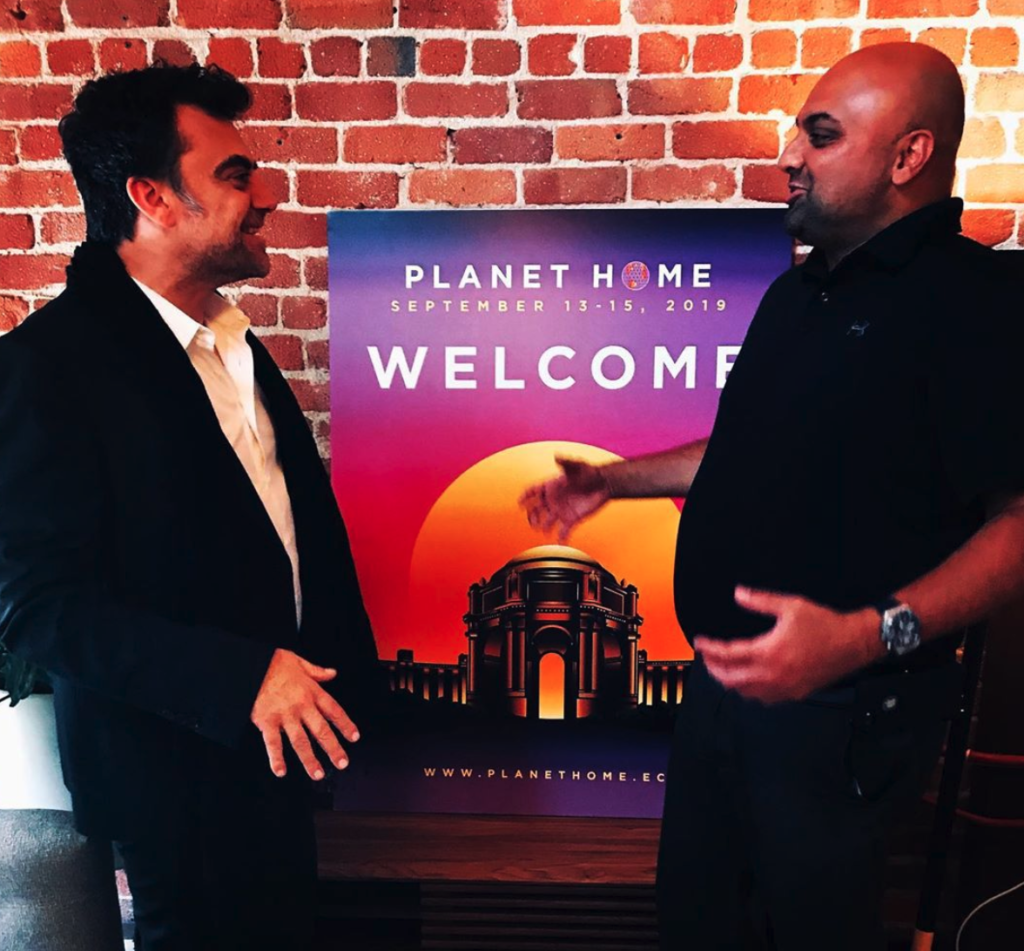
Solutionist Neil Sahota with Planet Home CEO Antony Randall

Artificial Intelligence and Sustainability

A valued member of the Planet Home solutionist community, Sahota embodies the belief that AI can play a vital role in helping us develop solutions for a more sustainable world. According to him, AI can power efforts to analyze and better understand the planet to help us create solutions for sustainable food production, circular economies, and even help us combat issues like climate change.

“Consider Evolv Technologies, using AI to develop ‘recipes’ to improve crop production with fewer resources,” Sahota explained in Forbes, “McKinsey published a paper on how AI will accelerate the circular economy by facilitating new product development that could reduce waste in the food industry by $127B a year in 2030!”

Artificial intelligence has the power to help researchers conduct deeper analyses and do so faster, allowing us to generate ideas and turn them into solutions at a rate that will help us meet the urgency of the planet’s most pressing challenges.

“If we teach the AI systems about long-term problems like climate change and pollution, it will keep a watchful eye on how these problems progress,” Sahota says, “If we take it a step further, AI can even identify solutions to mitigate these threats, or, perhaps, even solve them before they become a danger.”

The Artificial Intelligence Eco-Revolution

AI has been around as early as the 1960s, but thanks to major strides made by innovators like Neil Sahota in the past decade, the scientific community has been able to apply this technology in revolutionary ways.

According to IBM, Watson has enabled the development of solutions for water conservation, renewable energy, and sustainable agriculture. For example, environmental analytics company OmniEarth leverages Watson to draw insights from satellite imagery and data to address water shortages in drought-stricken areas. Artificial intelligence allows OmniEarth to process about 150,000 in 12 minutes to pinpoint potential water-wasting activities in order to help over 90 water authority agencies in California target impacted areas.

Meanwhile, Ocean Alliance’s SnotBot uses artificial intelligence combined with drones and analytics to keep a watchful eye on the health of the ocean’s ecosystem. The SnotBot drone follows whale pods to safely collect DNA samples from the mucus released through their blowholes. The data collected tells a story about the whale’s health and the overall health of its ecosystem. Then, AI is used to identify data patterns that help Ocean Alliance understand long-term effects.

The promise of AI is limitless, an encouraging notion for the present needs of our planet. Groundbreaking work by the likes of Neil Sahota inspires hope and, in Sahota’s own words, “Hope is what gets us started.”

Learn more about the future of artificial intelligence by following more of Neil Sahota’s work. Join our network and get to know more solutionists like Sahota and find out about other sustainability solutions.

Filed Under: Eat, Recent Tagged With: artificial intelligence, neil sahota, solutionist, technology

Celebrating Plastic-Free July with Mobot

August 4, 2020 by Rayanne Piana Leave a Comment

On Wednesday July 29, Planet Home’s very own Antony Randall (CEO) joined Lani Cooper, founder and CEO of Mobot, on Instagram Live to close out their month-long celebration of Plastic Free July. Every Wednesday this month, Cooper hosted a series of live interviews in a segment appropriately titled Talking Trash, discussing the challenges our planet faces and the actions we can take to make a positive impact.

The hour-long conversation between Randall and Cooper was full of friendly banter and laughs, scattered between nuggets of inspiration and wisdom. Watch the full interview below and check out some of our favorite takeaways:

Reduce, Reuse, Regenerate

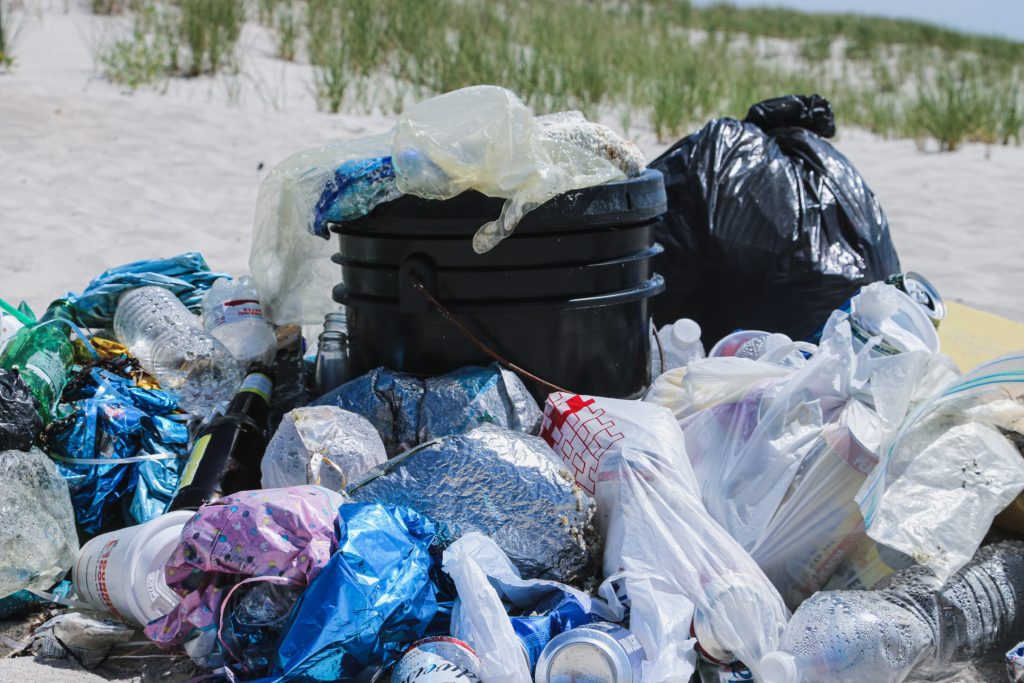
On the topic of Plastic-Free July, Randall and Cooper dove into a discussion about the harmful impacts of single-use plastics. Although recycling has become commonplace for many, 90.5% of plastic is still not being recycled. 

For a long time, the mantra has been, “reduce, reuse, recycle.” While recycling is still important, the key to protecting the planet from waste is focusing on reducing the number of products we consume and reusing items instead of throwing them away.  Beyond just plastic, there are so many other single-use items that we encounter in our day to day lives that we need to rethink. 

“We don’t really think about the cost of [single-use] items to the planet. We have single-use batteries, single-use plastic, single-use everything,” Randall said. “The first question is, can we change behaviors around purchasing and how much we really need?”

So many of us are caught in a lifestyle of continuously purchasing more than we really need, and it’s time we reevaluate our consumption habits. Reducing and reusing is not only better for the planet but is better for us as this de-clutters our lives and saves us money. Also, we need to reshape industries to be more in line with the regenerative principles of a circular economy.

At the industry level, there are macro-changes that need to happen, like moving towards green manufacturing or promoting innovations in material science by organizations like GreenBlue. There are also micro-actions that each of us can take, for example, cut back fast fashion and shop second-hand or simply reuse items already in your closet. Switch from disposable batteries to rechargeable ones. Avoid single-use plastic bottles and keep a reusable water bottle like Mobot’s.

The Importance of Mental Health & Wellness

When it comes to working against difficult challenges, like those that face our planet, the role of mental health and wellness often goes overlooked. Any type of work, whether it be related to the environment or otherwise, can be stressful and overwhelming, and can easily have a negative impact on one’s mental health. 

Especially during what has been a difficult year of confronting a global pandemic, people all around the world are experiencing economic and emotional strains unlike ever before. More than ever, it’s important to prioritize our health and wellness if we want to move forward towards a better future.

“I don’t know how we’re going to solve [problems] unless people are mentally well,” Randall said, “It’s okay to say you’re not okay.” In order to take care of the work that needs to get done, we need to take care of ourselves and each other. 

“If we’re doing all this to save the planet but there are no humans left, then what’s it all for?” Cooper pointed out, “We need to look out for each other, too.”

Organizations like the Anxiety and Depression Association of America (ADAA) connect people struggling with mental illnesses with the treatments, resources, and support systems they need. Whether you’re getting involved with organizations like the ADAA or supporting loved ones, it’s important for us to work together towards collective healing.

As the new generation of change-makers arises, it will be equally important to promote personal well-being as well as the planet’s well-being. We need to make sure they are provided the economical and emotional support they need to sustain their efforts.

“There are so many young people out there who are working hard [to make a difference] and we just need them to keep going,” Randall said. “Whatever you’re fighting for, just keep going.”

Watch the full interview between Antony Randall and Lani Cooper below.

https://www.instagram.com/p/CDP0pgLgRI0/

Filed Under: Eat, Recent Tagged With: antony randall, circular economy, health and wellness, instagram, interview, lani cooper, mental health, mobot, plastic-free july, recycling, regenerative, single-use plastic

5 Ways to Eat More Sustainably

July 30, 2020 by Rayanne Piana Leave a Comment

Here at Planet Home, we know taking everyday actions to live a healthier, happier life can have a direct impact on our own health as well as the health of our environment. Each of us has the power to create positive change for the planet by applying eco-focused solutions to our lifestyles, starting with the way we eat. 

We can improve what we eat and how we eat it to reflect more regenerative practices, so we can live in better harmony with our bodies and with the planet. We looked at five ways that we can better sustain ourselves and the planet to live happier, healthier lives. 

1. Plant-Based Options

The mass production of animal-based foods creates massive amounts of carbon emissions and wasteful byproducts that end up in our oceans. Moving towards a plant-based diet can help reduce the environmental impacts of meat and dairy production. Animal farming also uses about 70% of clean water, so replacing animal-based meals with plant-based options also helps reduce the waste of natural resources. Not only is a plant-based diet good for the earth, but it’s good for your body! Plant-based diets come with a variety of health benefits, including reduced risks for diabetes and heart disease, as well as an increased lifespan. 

2. Eat Less Meat

Not ready to go full vegan? That’s okay! Making changes to your lifestyle to support our environment isn’t an “all or nothing” deal. Incremental changes add up to make a big difference in the long run. Try skipping meat for one meal a day or even once a week to start, then work our way up from there. If you find yourself still craving meat, try out some plant-based meat alternatives by innovative brands like Impossible Foods founded by Pat Brown (you’ve probably heard of their famous Impossible Burger). According to scientific studies, if every American substituted meat for a plant-based option in just 1 out of every 4 meals, we could reduce greenhouse gas emissions by 82 million metric tons every year.

3. Avoid Single-Use Plastic Utensils

Single-use plastic materials like disposable spoons and forks create unnecessary waste that will struggle to decompose in a landfill. Opt for reusable utensils instead. The next time you’re getting food delivered, ask the restaurant or your food courier not to include a set of plastic utensils. Let them know you’ve got it covered. Consider investing in sustainably-produced utensils to bring with you on-the-go or to use at home. Check out our eco-friendly utensil set, made from renewable bamboo and encased in a pouch made of recycled bottles. Get it from the Planet Home store for just $10.

4. Reduce Food Waste

The FDA estimates that the average American household throws away 30-40% of the food supply. That means we are wasting a huge portion of food that is fit for consumption, sending it straight to a landfill. Reducing the amount of food you throw away will reduce the size of your carbon footprint and also emit fewer methane gasses that are harmful to the atmosphere. In New York, City Harvest fights food waste by rescuing wasted food and redistributing it to over 1.5 million New Yorkers facing food insecurity. What can you do to help? Shopping strategically, storing food efficiently, and keeping track of your kitchen inventory can help reduce the waste you produce. Reducing food waste will also save you money, and that’s always a plus!

5. Start Composting 

If you do find yourself with food scraps, start composting instead of letting the leftovers go to waste. Everything from vegetable scraps, to coffee grounds, to dead leaves in your hard can be put in the compost bin. Instead of increasing methane emissions by sending these materials to the landfill, composting reduces your carbon footprint and returns nutrients back to the earth. Composting also reduces the need for chemical fertilizers, enriching the soil in a more natural way.

Start applying these solutions today, and you’ll make a positive impact on the environment with every meal you eat. If you’re up for it, try out this 22-day plant-based challenge!

Filed Under: Eat, Recent Tagged With: carbon emissions, compost, diet, eat, food waste, health, plant-based, single-use plastic, sustainability, vegan, vegetarian, wellness

Look Outside Your Window: Nature is Healing!

July 30, 2020 by Rayanne Piana 4 Comments

Four months into a global coronavirus pandemic, some countries around the world have started to re-open society under a new normal. However, many communities have returned to stay at home orders to help reduce the spread of COVID-19 as it continues to spike in some areas. During what has become an isolating or uniquely challenging time for us all, it is more important than we cultivate positivity by seeking inspiration as we work our way towards collective healing. 

If you’re in search of inspiration, look no further than just outside your window!

Mother Earth is taking a breath of fresh air. The worldwide slowdown in human activity is helping our planet heal in ways we have long hoped to see. The positive impact on our planet is an added benefit to humanity staying at home en masse, and it is certainly a sight worth celebrating. 

Air Pollution is Declining

Countries all around the world are seeing notable improvements in air quality due to a combination of less cars on the road and a slowdown in industrial activity. In New Delhi, a city typically plagued by high levels of smog, residents are seeing clear air and blue skies for the first time in decades. The Indian Capital normally has an air quality index (AQI) of over 200 – dangerously high compared to the safe score of 25 according to the World Health Organization. Since India’s nationwide lockdown on March 24, the AQI in New Delhi is averaging at around 20, even falling as low as 7 one day. The city has over 11 million cars registered, and with less drivers commuting, exhaust carbon emissions are at a low.

Travel restrictions have also dramatically reduced the number of flights being taken. Commercial air travel is one of the biggest sources of emissions, contributing an estimated 5% of the harmful gases that cause global warming. As airlines are grounding large portions of their fleet, our skies are getting a much-needed break from air traffic and, as a result, the atmosphere is clearing up.

Cleaner Water in Our Oceans

Similarly, our waters are also experiencing the positive effect of decreased human activity in light of the lockdown. In Venice, the water in the iconic canals is the clearest it has been in 60 years, according to officials. With less tourists flocking to the historic Italian city and less traffic on the canals, Venice’s waters transitioned from a murky grey to a more natural blue. Reduced foot traffic from tourists also means less waste in the streets, and less possibility of single-use plastics polluting the lagoon.

In South Asia, the water flowing through the Ganga river is also showing improvement. According to the Ganga Pollution Control Board, the water quality has improved noticeably amid stay at home orders. Once upon a time, the river had been known for having water so pure that one could drink it straight from the source. If nearby settlements are able to sustain the water’s quality even after COVID-19, there is hope that the Ganga river can return to its former glory.

Wildlife is Reclaiming Land

The absence of humans has also encouraged animals to venture into spaces that are often too crowded with people for them to explore. In Wales, a herd of goats took over a local town as they freely roamed the empty streets and grazed on neighborhood trees. In San Francisco, just by the beloved Golden Gate Bridge, residents noticed coyotes enjoying a day at the beach at Kirby Cove. In Paris, wild boars peruse the streets once occupied by travelers, fashionistas, and cafe crowds. In Poland, families of deers are taking a stroll through the peaceful towns. Back in Venice, gondolas have been replaced with swans and fish swimming throughout the canals.

In our absence, animals are coming out of hiding and reconnecting with nature. The sight of wild animals interacting with our urban environment is an important reminder that we, as humans, are not alone in this world. We are, in fact, guests in an ecosystem that we share with species other than our own. We must remember that it is our responsibility to encourage animal conservation by creating an environment that can help wildlife not only survive, but thrive.

The Human Impact on Atmospheric Conditions

All the positive changes we’ve seen as a result of a worldwide shutdown are a needed reminder of the direct impact human activity has on the wellbeing of our environment. Although it is heartwarming to see notable improvements in air and water quality, we need to commit to sustaining these improvements if we want to see the planet continue to heal long after the pandemic is over. If not, we risk going back to square one. 

For example, in China, air pollution levels fell 25% across the country during its national lockdown period. However, as China moves into a post-coronavirus phase, air pollution is slowly beginning to increase again due to the return of traffic and the re-opening of power plants and factories. The coronavirus taught us an important lesson about the extent to which humanity is responsible for the state of our environment, and we can’t lose sight of this learning. Let the “new normal” we enter after this chapter be truly new, absent of the mistakes we’ve made in the past.

How Can I Help? 

If we want to continue healing our planet, we need to come together and take action to protect the future of the earth. At an individual level, there are behavioral changes and everyday solutions that can help you live more sustainably. At a collective level, we need to push leaders to make systematic changes that make our society more planet-friendly.

Are you ready to take a stand? Start by making your voice heard. Click here to sign ClimateVoice’s pledge to advocate for companies to go all-in on planet-friendly policy advocacy and sustainable business practices.

Filed Under: Move Tagged With: air pollution, atmosphericconditions, clean water, climate, coronavirus, covid, covid-19, human impact, nature, oceans, pandemic, reclaiming land, wildlife

  • « Go to Previous Page
  • Page 1
  • Interim pages omitted …
  • Page 52
  • Page 53
  • Page 54

Primary Sidebar

Recent Posts

  • PLANET HOME Announces $1 Million Tough Tech Prize at Inaugural Gala During Tough Tech Week
  • Planet Home and DataEnergy are solving the Green Computing Dilemma with Renewable AI Infrastructure
  • The Great AI Scale-Up: Balancing Compute Power with Planetary Boundaries
  • The Algorithm’s Bargain: Is AI Really for Good?
  • Code, Culture, and Creation: How AI is Remixing Entertainment’s DNA

Recent Comments

  • Liam Jacobs on Fricken’ Flying Taxis: The Future of Travel is Closer Than You Think
  • Izabella Bauer on The Pressing Plastic Problem
  • Broderick Ruiz on The Pressing Plastic Problem
  • Cherish Velez on The Pressing Plastic Problem
  • Anika Scott on The Pressing Plastic Problem

Archives

  • November 2025
  • April 2025
  • February 2025
  • January 2025
  • June 2022
  • April 2022
  • March 2022
  • February 2022
  • January 2022
  • December 2021
  • November 2021
  • October 2021
  • September 2021
  • August 2021
  • July 2021
  • June 2021
  • May 2021
  • April 2021
  • March 2021
  • February 2021
  • January 2021
  • December 2020
  • November 2020
  • October 2020
  • September 2020
  • August 2020
  • July 2020

Categories

  • AI
  • Community
  • Eat
  • energy
  • Featured
  • Live
  • Make
  • Move
  • Network
  • Press
  • Recent
  • Solutionist 100
  • Solutionists Making Moves
  • Solutions

Meta

  • Log in
  • Entries feed
  • Comments feed
  • WordPress.org

Design

With an emphasis on typography, white space, and mobile-optimized design, your website will look absolutely breathtaking.

Learn more about design.

TRENDING NOW

  • PLANET HOME Announces $1 Million Tough Tech Prize at Inaugural Gala During Tough Tech Week
  • Planet Home and DataEnergy are solving the Green Computing Dilemma with Renewable AI Infrastructure
  • The Great AI Scale-Up: Balancing Compute Power with Planetary Boundaries
  • The Algorithm’s Bargain: Is AI Really for Good?
  • Code, Culture, and Creation: How AI is Remixing Entertainment’s DNA

NEVER MISS A SOLUTION!

Sign up for our mailing list to stay up to date on planet saving solutions, news, and events from PLANET HOME!


BROWSE BY TAGS:

action carbon carbon emissions circular economy coronavirus eat education energy environment esg events fashion finance food green holidays industry lifestyle live make material science move music nature ocean oceans ocean stewardship planet plant-based plastic profile recycling s100 solutionist solutionists solutions sustainability tech technology tiktok transportation vegan waste water wildlife
Locations
Resources
Legal

Footer

Locations
Resources
Legal
  • Facebook
  • Instagram
  • LinkedIn
  • Pinterest
  • Twitter
  • YouTube
  • San Francisco
  • Los Angeles
  • New York
  • About PLANET HOME
  • Contact
  • Media
  • Employment
  • Terms of Use
  • Privacy Policy
  • Press

©2021 Planet Home. All rights reserved.
Use of and/or registration on any portion of this site constitutes acceptance of our User Agreement (updated 5/25/18) and Privacy Policy and Cookie Statement (updated 6/8/21) Your California Privacy Rights. The material on this site may not be reproduced, distributed, transmitted, cached or otherwise used except with the prior written permission of PH.

This website uses cookies to improve your experience. We'll assume you're ok with this, but you can opt-out if you wish. Cookie settingsACCEPT
Privacy & Cookies Policy

Privacy Overview

This website uses cookies to improve your experience while you navigate through the website. Out of these cookies, the cookies that are categorized as necessary are stored on your browser as they are essential for the working of basic functionalities of the website. We also use third-party cookies that help us analyze and understand how you use this website. These cookies will be stored in your browser only with your consent. You also have the option to opt-out of these cookies. But opting out of some of these cookies may have an effect on your browsing experience.
Necessary
Always Enabled
Necessary cookies are absolutely essential for the website to function properly. This category only includes cookies that ensures basic functionalities and security features of the website. These cookies do not store any personal information.
Non-necessary
Any cookies that may not be particularly necessary for the website to function and is used specifically to collect user personal data via analytics, ads, other embedded contents are termed as non-necessary cookies. It is mandatory to procure user consent prior to running these cookies on your website.
SAVE & ACCEPT