• Skip to primary navigation
  • Skip to main content
  • Skip to primary sidebar
  • Skip to footer
Planet Home

Planet Home

Culture Solutions

  • ECOSYSTEM
    • EAT
      • Food Security & Production
      • Land Stewardship
      • Ocean Stewardship
      • Health + Wellness
    • MAKE
      • Circular Economies
      • Green Manufacturing
      • Material Science
      • Regenerative Ecosystems
    • MOVE
      • Clean Transport
      • New Fuel Sources
      • Virtual Connections
      • Ecological Explorations
    • LIVE
      • Sustainable Communities
      • Biodiversity
      • Atmospheric Conditions
      • Renewable + Equitable Energy
  • VENTURE STUDIO
  • LABS
  • EVENTS
  • ARTICLES
    • Featured
    • Network
    • Press
  • Menu bars
  • COMPANY
  • VENTURE STUDIO
  • LABS
  • ABOUT
  • CONTACT
  • NETWORK
  • ECOSYSTEM
  • COMMUNITY
  • MEDIA
  • VIDEO
  • PHOTO
  • PRESS
  • Podcast
  • EVENTS
  • ALL
  • 2019 SUMMIT
  • 2017 SUMMIT
  • Terms of Use
  • Privacy Policy
  • Facebook
  • Instagram
  • LinkedIn
  • Pinterest
  • Twitter
  • YouTube

Greenwashing: How False Advertising Plays into Conscious Consumerism

Greenwashing: How False Advertising Plays into Conscious Consumerism

September 17, 2020 by Mackenzie Riley Leave a Comment

As shoppers, it’s an easy choice for most of us to buy from companies that support our core values. We can cast a “dollar vote” for more sustainable or ethical brands and products. As the movement of conscious consumerism grows exponentially, many companies have caught on to the impact that appearing more sustainable can have on the demand for their products. 

What is conscious consumerism?

Conscious consumerism has been used throughout modern economies for consumers to advocate for issues they believe in such as product safety, health, and more ethical labor practices. Buying from companies that share consumers’ values allow them to find a community among shared beliefs and feel good about what they purchase. This movement allows consumers to boycott and buy the products they feel do or do not support their beliefs. 

Companies have responded to this, responding to consumer calls to become more ethical and sustainable. The popular ice cream brand, Ben and Jerrys, has constantly shown their support for different social and political movements. Ben and Jerrys advocacy during the climate strikes motivated many customers to ramp up support for their brand, showing support for a company that agrees with their values. Unfortunately, some companies have caught onto this trend of buying from eco-friendly organizations and are using it as a marketing tool. 

Greenwashing and false advertising

With the rise of the green movement, consumers have become more aware of how their choices influence the environment. Along with this, companies have come to realize just how effective green marketing is. 

Green marketing has become an effective tactic of companies wishing to position themselves as the more sustainable option. There are currently very few requirements a company must meet in order to market themselves as green, or eco-friendly, allowing many companies to include green marketing when their products are not as sustainable as their claims. 

For example, Fiji Water was recently sued for incorrect claims of being the “environmentally superior water bottle.” In reality, Fiji Water has some of the worst environmental impacts of any water brand. Their operations disrupt the native environments and economies of Fiji. The Carbon emissions created by shipping bottled water from the other side of the world resulted in “46 million gallons of fossil fuel, producing approximately 216,000,000 billion pounds of greenhouse gases per year,” as reported by Forbes.

What can you do?

Not falling for greenwashing is difficult as many companies use strategic marketing tools to appear more environmentally conscious. Still, there are several things you can do to ensure that you won’t be fooled by greenwashing. 

Be wary of buzzwords, many companies will simply label their products as “eco-friendly” without true substance to back these claims. It’s important to research a product before you buy it for ethical reasons. A lot can be revealed about the true sustainability of a product by glancing over its ingredients and nutritional labels. Also, most products truly made from recycled materials will include this on their packaging. Finally, also try to see if you can find a third-party source that verifies the brand’s claims about the sustainability of their products. 

As consumers, it is our responsibility to support companies that we share belief systems with. By being a conscious consumer you are showing support to companies that are truly supporting the green movement and adopting more ethical practices. So the next time you visit the grocery store – take the extra moment to cast the proper “dollar vote.”


Filed Under: Make, Recent

A Trashy Pandemic: COVID-19’s Waste Problem

September 17, 2020 by Cassandra Townsend Leave a Comment

At this point, we’re all familiar with COVID-19 and the ongoing pandemic. Many workers started working from home in the spring and a lot of us still are. Others faced unemployment. Students, from K-12 to college, were sent home and transitioned to online learning. One way or another, we’ve all been personally impacted.

But, the worldwide lockdown also made an impact on the environment. We’ve all probably seen a stray disposable mask or glove in a parking lot, but the impacts span much further than that.

The Good News

In Yosemite, parts of the park usually full of traffic and people saw animals such as black bears, bobcats, pronghorns, and deer come out of hiding around buildings and walking trails. This was seen in parks around the country during the spring lockdown. Globally, daily carbon dioxide emissions decreased by 17% during the lockdown, with some countries seeing a decrease of 26%.

Turns out we’ve also used less power in comparison to last year, as energy demands decreased in both the U.S. and E.U. In the United States, energy usage dropped, though by how much depends on the region. Warmer areas like Florida dropped minimally, while in the central U.S. and in New York, a decrease of 9-13% was seen in March and April. This can be attributed to businesses closing, including manufacturing plants. In the E.U., energy demand was 10% below that of 2019 in June, and at the end of July, it was still 5% below demand for 2019.

The good news doesn’t come without challenges, though.

Going Down the Drain

In April, water usage increased 21% compared to normal levels in the U.S., according to Phyn, a water-monitoring company. This includes sink, toilet, shower, and washing machine use. According to the study, part of this is due to people washing their hands more often and for longer durations, in accordance with CDC guidelines. We’re also, on average, showering more and using the toilet more. However, non-residential usage decreased up to 19% in some areas of the United States in April, as businesses shut their doors during stay-at-home orders.

This decrease in non-residential water usage doesn’t offset the increase in residential usage, though, especially given the ongoing droughts across the country. Several states have issued water restrictions or encouraging conservation mindsets, including parts of New Hampshire, Massachusetts, and Florida.

Also, there are currently 102 wildfires burning as a consequence of drought. To donate to wildfire funds, the Community Foundation of Santa Cruz County has a list of resources.

Our Trash Problem

Excess trash creation has been an issue for a long time now, especially plastic waste. Plastic waste accumulation impacts habitats by altering the physical structure, blocking light, and even decreasing oxygen levels. The plastic can absorb chemicals, transporting them to new areas where they can harm wildlife, and the waste physically hurts marine and terrestrial wildlife.
We create two billion tons of garbage a year, and the World Bank estimates that global trash will increase to 3.4 billion tons by 2050.

Since the pandemic began, we’ve been creating more trash. From plastic bags at the grocery store to disposable masks and gloves, the piles have been growing. Residential waste saw a 30% increase in some regions of the United States, as states and companies banned the use of reusable shopping bags and restaurants turned to disposable take-out containers and even menus. In the United Kingdom, some areas saw increased waste as well (as of June), which led to increased mismanagement through more usage of landfills and incineration and less recycling. Cities across Asia also reported an increase in medical waste, with Wuhan, China, reporting more than four times the amount of waste of previous months.

How You Can Help

Luckily, there’s endless ways to help that range from education to recycling to simply being more aware of how much water you’re using.

Are you worried about energy consumption? Consider going green if it’s available in your area. GridAlternatives is an organization that helps low-income communities install solar panels and helps create jobs in those communities. Worried about your water usage? Reset, a European based sustainability website, offers solutions for various world issues, including water usage. They range from shorter showers, eating less meat, to finding better appliances.

Now, trash. Helping with the current waste issue is just as easy now as it was before the pandemic. While many places are still take-out only and many stores still don’t allow reusable bags, you can still use a reusable mug if you make your coffee at home. Use a reusable mask instead of a disposable. You can also start composting. CompostNow can help get you or your community started. If you want to learn more, 5 Gyres hosts a Trash Academy, an online lesson platform to learn about plastic. You can also donate, to help fund research projects into plastic solutions across the globe.

We are in unprecedented times. But, unprecedented times call for unprecedented solutions. The environment and all the human-made issues will still be there when things are normal again, so why don’t we take this pause to help out in whatever way we can?

Filed Under: Make, Recent Tagged With: coronavirus, covid-19

How 3-D Printing is Redefining the Meat Industry

September 17, 2020 by Mackenzie Riley Leave a Comment


Food from a printer seems like something pulled right out of a dystopian movie. But, it may just be the future of the alternative meat industry. The ability to affordably and quickly manufacture food without the need for mass amounts of land and infrastructure will save producers lots of money and have a positive impact on the planet.

The market of alternative meat products has gained momentum as many individuals seek to eliminate meat from their diets for both health and environmental benefits. The startup Redefine Meat has taken this industry to the next step by creating 3D industrial printers that can print faux meat, or a plant-based alternative to regular meat. 

What’s so wrong with meat?

The meat industry is one of the largest contributors to greenhouse gases between the methane released from cows, water depletion, and processing and transportation of meat products. In the coming years, the plant-based foods industry will be one of the key instruments to reducing our carbon footprint. Slaughterhouses require large amounts of land and natural resources to farm and process animals. In addition to this the meat industry requires large amounts of feed crops to support their livestock, adding to increased fertilizer in the soil and land depletion. 

Plant-based diets also have many health benefits, consuming red meat whether it is processed or unprocessed has links to diabetes, heart disease, and cancer. Meat alternatives feature healthier ingredients that do not have the same links to detrimental health effects. As demand for alternative meat products ramps up, companies like Redefine Meat will help fill those demands. 

Solutionists Redefining Meat

Redefine Meat’s printers can produce up to 250 kilograms of faux meat a day according to creator Ben-Shitrit. These printers still have a long way to go, as they cannot yet compare to the amount of meat produced in traditional slaughterhouses which process over 100,000 cows a day, but this still shows a solution for the impacts of the meat industry. Redefine Meat has not yet disclosed how much the printers will cost, but the price of the steaks produced from the printers will be priced comparably to traditional steaks. 

Food engineer Alexey Tomsov stated that the company’s key to profit is to create a product with the same taste and texture as traditional meat. To do this they identify three components that make the perfect steak, the muscle, blood, and fat. To replicate this the recipe utilizes soy, pea proteins, coconut fat, and sunflower oil. All the ingredients in these steaks are completely plant-based and vegan. 

So far Redefine Meat is not the only company racing to become a leader in the alternative meat industry. Another startup, Novameat is also developing 3D printed steaks, but also a muscle version of pork products. Household names such as Impossible Foods, founded by solutionist Patrick Brown, have revolutionized the faux meat industry as an increasing number of restaurants offer their products as vegan alternatives. According to Allied Market research the global faux meat marketed is projected to reach a value of $8.1 billion dollars by 2026, hoping to revolutionize the way we eat. 

What can you do?

Alternative meat products have become the center of many people’s diet as they choose to cut out meat. Eating plant based has many benefits for your personal health and the environment. 

Making a change doesn’t mean tossing out the meat and dairy in your refrigerator, it can start with choosing an Impossible Whopper from Burger King, including more plant-based recipes into your routine. You don’t have to quit eating meat all at once, even skipping meat for just one meal a day can make a difference. Try Participating in Meatless Mondays to go plant-based one day a week. 

With one individual taking the step to limit their meat consumption, it supports a larger movement of individuals bettering themselves and our environment. Shrinking our carbon footprints is one step in the journey to create a better future for our planet, and companies like Redefine Meat are paving the way. 

Filed Under: Eat, Recent Tagged With: food production, plant-based

Building Sustainable Cities in the New Normal

September 13, 2020 by Antony Randall Leave a Comment

In a world with an ever-growing population, we are faced with the difficult task of designing cities and forming communities that are resilient, safe, sustainable, and inclusive. Many consider moving away from cities for places with more space. So, we must innovate to make urban areas a more desirable place to live. During these trying times of Covid-19, we can look to the future as an opportunity to redesign the way we live. As we build our “new normal,” we should aim to shape our communities with sustainable and regenerative practices.

Facets of Sustainable and Regenerative Life

There are four qualities that make a sustainable and regenerative city:

1. Livability – This seems to be a quality we would expect out of any city, but it goes way beyond just being a place that can be lived in. It is a city that is designed to meet the needs and wants of its citizens. This would likely improve the happiness and wellness of citizens because the city is designed with them in mind. This is done through upgrading infrastructure, increasing affordability, revitalizing the natural environment, and much more.

2. Ecology and Nutrition – A sustainable and regenerative city is one that celebrates nature, with the natural environment contributing to improved mental health. With the growing demand for cleaner air in living spaces, communities can Incorporated living buildings. These are self-sufficient spaces that connect occupants to light, air, food, nature, and community. In addition, integrating urban farming into the city’s culture can benefit the economy, people’s health and well-being, and be a learning opportunity for its citizens.

3. Waste – A sustainable and regenerative city eliminates waste in all ways that it can, developing what is known as a circular economy. In a zero-waste system, resources are employed in the optimal way, contributing to what makes these cities sustainable. Sustainable cities and communities often go beyond eliminating waste. They and aim to produce more of resources like water and energy than what they use.

4. Resilience – sustainable cities and communities are prepared for the unexpected, from small issues to large natural disasters. Resilient cities and communities have a free flow of information and actively communicate, creating an inclusive and safe atmosphere. In the age of Covid-19, resilience is ever more necessary. Services should be easily accessible in times of crisis and measures should be put in place to adapt to unforeseen scenarios.

a building rooftop covered in greenery

Solutionists of Regenerative Design

Sustainable and regenerative cities are not simply twinkles in the eyes of urban designers. In fact, they are a reality that many solutionists are actively working towards. 

The International Living Future Institute is one organization employs the principles of regenerative design to improve our way of life. Their goal is to structure cities that work for the population’s benefit. They develop workspaces that promote collaboration, products that are not only sustainable but actually give back to the environment, and implement biolithic design – connecting people to nature within the built environment. The institute challenges the world to create living buildings, communities, and products and measure success based on actual outcomes rather than predictions. They plan to roll out their inaugural Zero Carbon Conference on October 7-8, 2020 with the theme of “Scaling Our Decarbonized Future.” The conference will dig deep into how to create zero-carbon buildings and communities.

Mitchell Joachim, co-founder of another such organization, Terreform ONE, points to the pandemic as the crisis we needed and have been waiting for to “get any kind of change happening.” In this time, everyone is reevaluating their ways of life and many norms are changing. Terreform ONE is a non-profit architecture and urban design research-based consulting group. They aim to illuminate the environmental possibilities related to those sectors. Their projects span from new, innovative green buildings to a completely redesigned Shanghai Waterfront. Simply scroll through their projects page to get a sense of this sustainable world of possibilities.

For an organization specifically focussed on Regenerative Design, look to Regenesis. They have worked on over 200 global projects, including The Willow School, a K-8 school in New Jersey designed around ecological system regeneration and redevelopment of a large part of the Rio Sabinal to address flooding and water-quality issues while simultaneously making it a pedestrian-friendly walking site.

image of tall city buildings covered in greenery

Your Impact

So what can you do to contribute to this sustainable future? 

You can try to purchase products from companies that not only work to reduce their carbon footprint but actually try to have a positive social and environmental impact. Also try contacting your energy provider to see whether you can transition to grid alternatives like solar energy to help reduce energy waste. You can compost, carpool or walk or bike, and encourage your neighbors to spend more time in nature. Changing some of your everyday habits to be more planet-friendly can be part of your new normal.

To go further, you can encourage your city and community to work towards building more LEED (Leadership in Energy and Environmental Design) certified green buildings. This will benefit not only the environment and community health, but also the economy. Change can start with just one person, expand through your community, and eventually reach the world.

Filed Under: Live, Recent Tagged With: regenerative design, sustainable cities

What You Need to Know About Coral Bleaching (And What You Can Do About It)

September 12, 2020 by Caitlin Fields Leave a Comment

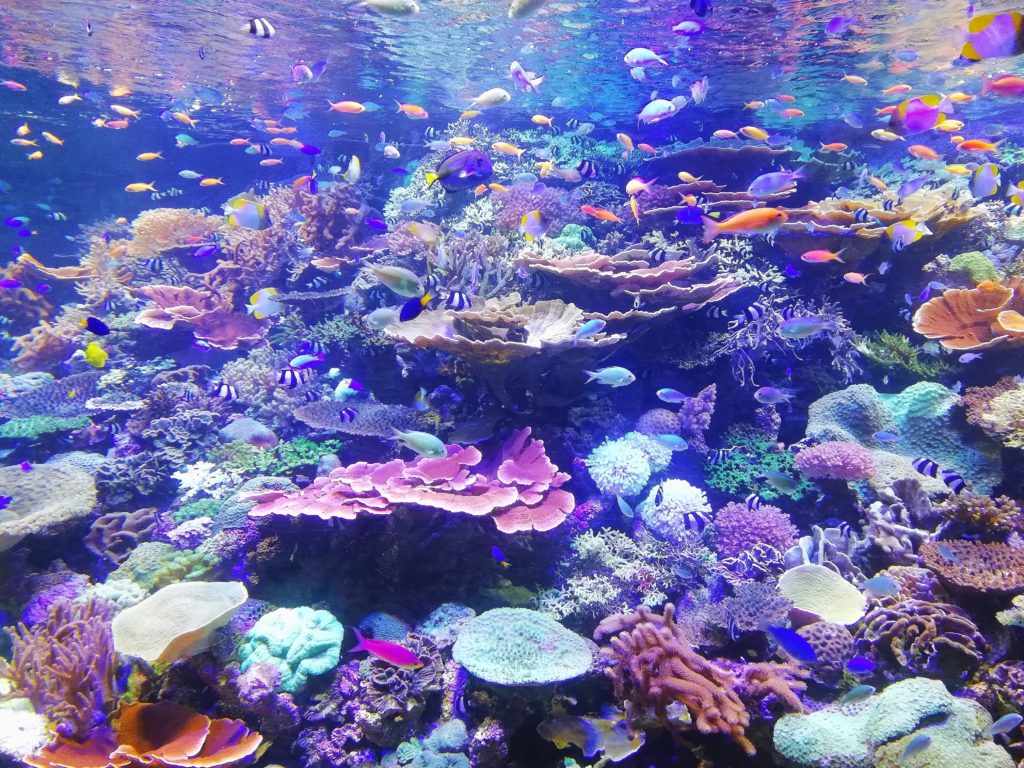
Every year, tourists flock to places like Australia with hopes of seeing the Great Barrier Reef. Many of them go boating around the area to get a glimpse of wildlife just under the surface, while others take part in scuba diving around the area to get the full experience of this natural beauty. Unfortunately, what was once an amazing escape from shore life has now become a shell of its former self. Vibrant corals have become a dull white, and the fish inhabiting these reefs have long become homeless due to the harsh act of coral bleaching.

What is Coral Bleaching?

To understand the concept of bleaching, it is important to acknowledge the reason why corals have color in the first place. These species are covered in small symbiotic algae called zooxanthellae, which provide color, protection, and energy to the coral. Normally, these two live together in peace. But if corals become stressed, they will expel the algae from their surface and prevent it from reattaching while under negative conditions. Once detached, the coral will turn white and sickly, inspiring the name “coral bleaching”.

What Causes Coral Bleaching?

There are many reasons why corals struggle in their living conditions, but the biggest cause is climate change. Oceans take in roughly 93% of the heat given off by global warming. When the temperature of the water gets too hot, the coral living in these areas rejects the algae. Climate change also induces issues concerning the amount of light that the coral is exposed to, and the amount of nutrients reaching them.

Humans also directly contribute to bleaching through overfishing, coastal development, pollution, and tourism.

• Coastal development causes heavy erosion, which clouds the water and keeps the zooxanthellae from absorbing the sunlight it needs to survive.

• Overfishing allows invasive species like seaweed to grow exponentially, which blocks light and nutrients.

• Pollution can change the pH of the water, making it harder for calcium carbonate to form. This prevents corals from building their skeletons.

• Divers often destroy corals by stepping on them, while others break off pieces of the coral as “souvenirs.”

• Cruise ships impact the ecosystem surrounding coral reefs and block the light necessary for photosynthesis.

How Does this Impact Our Planet?

Coral reefs take up less than 1% of the ocean’s floor, but they provide habitats and predatory protection for over a quarter of marine life. Unfortunately, between 2014 and 2017, over 75% of the world’s reefs suffered bleaching, and roughly 30% of those reefs ended up dying. If the corals continue to die at such a high rate, hundreds of species could become extinct. These areas are also the highest for biodiversity, which stands to suffer if more corals die off.

colorful coral reef

How Does This Affect Humans?

In addition to being tourist attractions, coral reefs are also the source of enough resources and food for over 500 million people across the globe. Their existence affects the lifestyles, food security, and safety of hundreds of thousands of people without them even realizing it. For those living in coastal communities, these reefs are responsible for taking the hits from heavy waves, neutralizing tropical storms to a certain extent in order to keep those communities safe. If that weren’t enough, over 50% of cancer drug research currently ongoing involves marine life sustained by reefs.

Solutionists Protecting Our Reefs & Oceans

While it is possible for a bleached coral to heal, it is extremely rare and takes decades to achieve. Most die, and once coral is gone, there’s no coming back. Thankfully, many organizations are working to create solutions that protect coral reefs and our oceans.

The Coral Reef Alliance (CORAL) is a non-profit organization dedicated to restoring the world’s coral reefs. They work with communities to reduce threats to coral species. They also collaborate with scientists to research the impacts of climate change on the reefs and their adaptation to the changing world. You can donate to their cause here.

The Surfrider Foundation is a small organization that works in local chapters to advocate and fight for our ocean’s continued survival. They’re involved with issues such as plastic pollution, coastal preservation, and clean water. To donate to this cause, click here.

The Coral Gardeners help restore coral reefs through maintaining restoration nurseries. They start with broken pieces of coral, attach them to bamboo stems, and let them grow for a month before replanting them into a reef. By doing this, they are giving direct individual attention to each and every coral and ensuring the continued existence of the reefs piece by piece.

What You Can Do to Help

• Avoid using herbicides and pesticides while gardening or for home use, as they contribute to pollution and can prevent corals from being able to reproduce

• Recycle to decrease pollution and the number of landfills across the planet

• Use water sparingly! Take shorter showers, and don’t leave the water running when you brush your teeth or wash dishes. This reduces the amount of wastewater entering the ocean.

And last but not least,

• Adopt a coral! You can pay roughly $29.50 to adopt a coral at the Coral Gardeners‘ nurseries. You’ll get to name it, you’ll receive an adoption card with information, and your donation will help coral reefs slowly make their return to the oceans. Each person in this organization is passionate about preserving the reefs, and they take care of each individual coral that is adopted in their underwater nurseries.

If we all come together one at a time, we can create a better future for the world’s oceans, and humanity too.

Filed Under: Eat, Recent Tagged With: coral bleaching, coral reefs, ocean stewardship

The Fashion Industry’s Dirty Secret

September 10, 2020 by Vanessa Shepherd Leave a Comment

For nearly eighty years, New York Fashion Week has been a way for designers to gain exposure through a series of prestigious runway shows. However, not even the longest-standing traditions remain untouched in the age of COVID-19. This September, New York’s Governor Andrew Cuomo said the show(s) will go on, but not without necessary health precautions. Shows must either be held outside with a maximum of fifty spectators (all wearing masks) or indoors with no audience. This announcement created uncertainty among fashion executives. Without coveted seats to fill, is a physical runway worth it? Some designers, like Rebecca Minkoff, believe it is; but the majority are opting for digital alternatives. 

Transitioning to digital is a huge deal for the fashion industry. Traditionally, celebrities and press from all over the world flock to New York City for this one week  – but digital runways eliminate the need for travel. This is great news for the environment, because it avoids the massive amount of carbon emissions associated with a traditional NYFW. Going digital also creates an important shift in high fashion; By making previously exclusive shows accessible to anyone with an internet connection, brands will reach more consumers than ever before.

The Truth About Fashion’s Pollution Problem

Accessibility in fashion is important, especially from an environmental perspective. Many people think nothing of buying a new shirt or pair of jeans. Yet they fail to realize the environmental burden their purchase carries – and that’s not necessarily their fault! Brands don’t print “it took 7,500 liters of water to make these jeans” on the price tag.

Fashion’s environmental impact is often hidden behind the glamor of luxury brands or fast fashion’s low prices, but the truth is that pollution and wastefulness are woven into the fabric of the fashion industry. It is the second most polluting industry in the world, topped only by fossil fuels; and while this is common knowledge within the fashion world, many consumers remain unaware. Brands fear creating accessibility because publicly releasing the information could create demands for transparency – a touchy subject in the industry.

Many brands avoid publicizing information about their production methods, because common practices in fashion favor a larger profit over a smaller environmental impact. To offer products at low prices, brands utilize cheap materials and methods; and cutting corners like this causes disastrous effects on the environment, like excessive water usage and water pollution. According to Sustain Your Style, the fashion industry uses a whopping 1.5 trillion liters of water every year.

Cotton, often marketed as “sustainable”, is actually an environmentally harmful textile because it requires astronomical amounts of water. When textiles are dyed, the runoff (water polluted by dye chemicals) flows into surrounding rivers. Textile dyeing is the second largest polluter of our planet’s water, and this contaminated water ends up in our oceans, spreading pollution further… And the list goes on. 

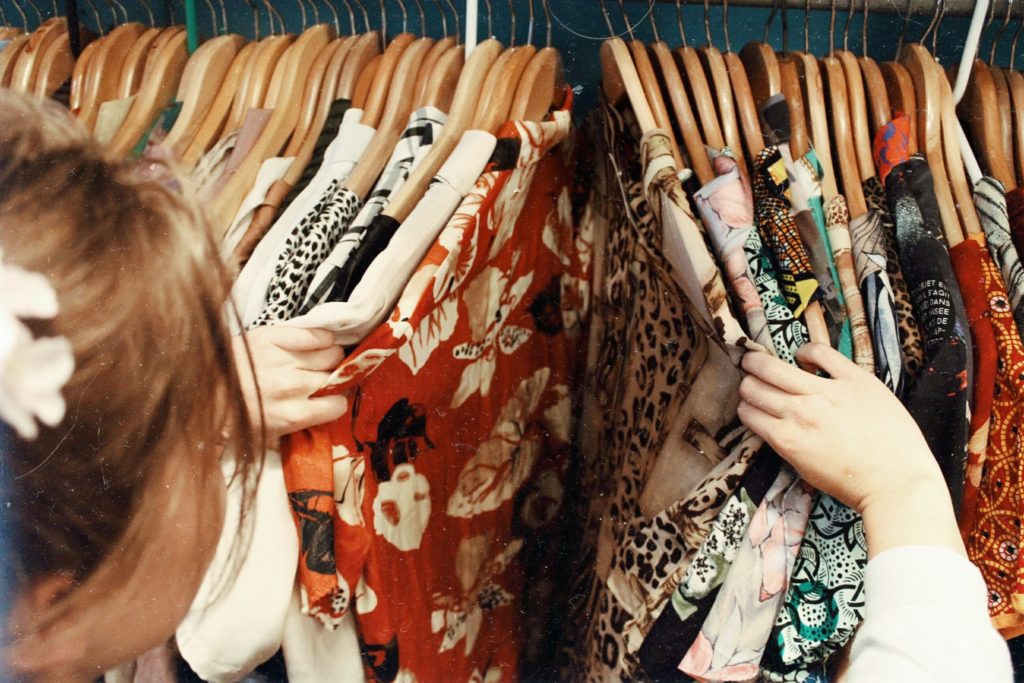
woman browsing blouses on a clothes rack

Along with pollution, a core aspect of fashion’s detrimental environmental impact is the modern consumer’s mindset of always wanting more. This fosters an industry-wide attitude of gluttony, destroying the environment through non-stop production of goods and mountains of textile waste. 

As long as consumers continue to purchase in this need-more mindset, the industry has incentive to continue operating in the same unsustainable ways. With that said, we as consumers have the power to open the door for foundational change within the fashion industry.

Here’s how:

Support Sustainable Brands

“Mindful purchasing” means truly considering which purchases are necessary (and which ones aren’t). This starts with doing some digging into brands we support, and demanding transparency from them. If a brand hasn’t published anything about their environmental impact, commenting on their social media or sending them emails can go a long way. It’s important to hold brands accountable, so that we can know the impact of our purchases and then make informed decisions about where we shop. 

Some popular fashion brands committed to providing transparency are: Allbirds, Boody, and Everlane. Each brand is open and honest about their materials & manufacturing, and they practice what Everlane calls “Radical Transparency” by clearly stating their sustainable initiatives and making their information accessible to anyone.

Although the shift towards sustainability has been slower with big brands, there are many smaller brands committed to creating products that benefit both consumers and the planet. One of these brands is Roark, an eco-friendly men’s fashion label. Check out this video to learn more, or visit their website where they talk about their sustainable mission.

Practice Mindful Purchasing

Besides deciding where to buy, mindful purchasing is consciously cutting down what we buy. Fast fashion tells us we need to constantly purchase new things, but with so many discarded garments already sitting in our landfills, what we really need is to simply purchase less. The next time you’re contemplating buying something, try asking these questions:

  • Will I wear this at least 25 times?
  • Is the quality of this item good enough to last more than 5 years?
  • Is there somewhere I can buy this secondhand, instead?
  • Where will this end up after I’m done using it?

Making the environmentally conscious choice isn’t always easy. But mindful purchasing doesn’t mean never purchasing anything again – it’s simply a way to reduce your individual consumption by being a more conscious consumer. Sometimes it may feel like a drop in the bucket, but if everyone were to be a more conscious consumer then we could create a huge wave of change in the fashion industry and beyond.

Filed Under: Make, Recent Tagged With: fashion

  • « Go to Previous Page
  • Page 1
  • Interim pages omitted …
  • Page 49
  • Page 50
  • Page 51
  • Page 52
  • Page 53
  • Page 54
  • Go to Next Page »

Primary Sidebar

Recent Posts

  • PLANET HOME Announces $1 Million Tough Tech Prize at Inaugural Gala During Tough Tech Week
  • Planet Home and DataEnergy are solving the Green Computing Dilemma with Renewable AI Infrastructure
  • The Great AI Scale-Up: Balancing Compute Power with Planetary Boundaries
  • The Algorithm’s Bargain: Is AI Really for Good?
  • Code, Culture, and Creation: How AI is Remixing Entertainment’s DNA

Recent Comments

  • Liam Jacobs on Fricken’ Flying Taxis: The Future of Travel is Closer Than You Think
  • Izabella Bauer on The Pressing Plastic Problem
  • Broderick Ruiz on The Pressing Plastic Problem
  • Cherish Velez on The Pressing Plastic Problem
  • Anika Scott on The Pressing Plastic Problem

Archives

  • November 2025
  • April 2025
  • February 2025
  • January 2025
  • June 2022
  • April 2022
  • March 2022
  • February 2022
  • January 2022
  • December 2021
  • November 2021
  • October 2021
  • September 2021
  • August 2021
  • July 2021
  • June 2021
  • May 2021
  • April 2021
  • March 2021
  • February 2021
  • January 2021
  • December 2020
  • November 2020
  • October 2020
  • September 2020
  • August 2020
  • July 2020

Categories

  • AI
  • Community
  • Eat
  • energy
  • Featured
  • Live
  • Make
  • Move
  • Network
  • Press
  • Recent
  • Solutionist 100
  • Solutionists Making Moves
  • Solutions

Meta

  • Log in
  • Entries feed
  • Comments feed
  • WordPress.org

Design

With an emphasis on typography, white space, and mobile-optimized design, your website will look absolutely breathtaking.

Learn more about design.

TRENDING NOW

  • PLANET HOME Announces $1 Million Tough Tech Prize at Inaugural Gala During Tough Tech Week
  • Planet Home and DataEnergy are solving the Green Computing Dilemma with Renewable AI Infrastructure
  • The Great AI Scale-Up: Balancing Compute Power with Planetary Boundaries
  • The Algorithm’s Bargain: Is AI Really for Good?
  • Code, Culture, and Creation: How AI is Remixing Entertainment’s DNA

NEVER MISS A SOLUTION!

Sign up for our mailing list to stay up to date on planet saving solutions, news, and events from PLANET HOME!


BROWSE BY TAGS:

action carbon carbon emissions circular economy coronavirus eat education energy environment esg events fashion finance food green holidays industry lifestyle live make material science move music nature ocean oceans ocean stewardship planet plant-based plastic profile recycling s100 solutionist solutionists solutions sustainability tech technology tiktok transportation vegan waste water wildlife
Locations
Resources
Legal

Footer

Locations
Resources
Legal
  • Facebook
  • Instagram
  • LinkedIn
  • Pinterest
  • Twitter
  • YouTube
  • San Francisco
  • Los Angeles
  • New York
  • About PLANET HOME
  • Contact
  • Media
  • Employment
  • Terms of Use
  • Privacy Policy
  • Press

©2021 Planet Home. All rights reserved.
Use of and/or registration on any portion of this site constitutes acceptance of our User Agreement (updated 5/25/18) and Privacy Policy and Cookie Statement (updated 6/8/21) Your California Privacy Rights. The material on this site may not be reproduced, distributed, transmitted, cached or otherwise used except with the prior written permission of PH.

This website uses cookies to improve your experience. We'll assume you're ok with this, but you can opt-out if you wish. Cookie settingsACCEPT
Privacy & Cookies Policy

Privacy Overview

This website uses cookies to improve your experience while you navigate through the website. Out of these cookies, the cookies that are categorized as necessary are stored on your browser as they are essential for the working of basic functionalities of the website. We also use third-party cookies that help us analyze and understand how you use this website. These cookies will be stored in your browser only with your consent. You also have the option to opt-out of these cookies. But opting out of some of these cookies may have an effect on your browsing experience.
Necessary
Always Enabled
Necessary cookies are absolutely essential for the website to function properly. This category only includes cookies that ensures basic functionalities and security features of the website. These cookies do not store any personal information.
Non-necessary
Any cookies that may not be particularly necessary for the website to function and is used specifically to collect user personal data via analytics, ads, other embedded contents are termed as non-necessary cookies. It is mandatory to procure user consent prior to running these cookies on your website.
SAVE & ACCEPT