• Skip to primary navigation
  • Skip to main content
  • Skip to primary sidebar
  • Skip to footer
Planet Home

Planet Home

Culture Solutions

  • ECOSYSTEM
    • EAT
      • Food Security & Production
      • Land Stewardship
      • Ocean Stewardship
      • Health + Wellness
    • MAKE
      • Circular Economies
      • Green Manufacturing
      • Material Science
      • Regenerative Ecosystems
    • MOVE
      • Clean Transport
      • New Fuel Sources
      • Virtual Connections
      • Ecological Explorations
    • LIVE
      • Sustainable Communities
      • Biodiversity
      • Atmospheric Conditions
      • Renewable + Equitable Energy
  • VENTURE STUDIO
  • LABS
  • EVENTS
  • ARTICLES
    • Featured
    • Network
    • Press
  • Menu bars
  • COMPANY
  • VENTURE STUDIO
  • LABS
  • ABOUT
  • CONTACT
  • NETWORK
  • ECOSYSTEM
  • COMMUNITY
  • MEDIA
  • VIDEO
  • PHOTO
  • PRESS
  • Podcast
  • EVENTS
  • ALL
  • 2019 SUMMIT
  • 2017 SUMMIT
  • Terms of Use
  • Privacy Policy
  • Facebook
  • Instagram
  • LinkedIn
  • Pinterest
  • Twitter
  • YouTube

The Consequences of Your Cotton T-shirt

The Consequences of Your Cotton T-shirt

September 22, 2020 by Vanessa Shepherd Leave a Comment

Across Kazakhstan and Uzbekistan lies the Aral Sea, once the world’s fourth-largest body of inland water. Actually a saline lake, the Aral Sea previously covered 26,000 miles (67,300 square kilometers) of East Asia — today, it is about one-tenth of its original size.

What dried up this massive marvel? Simply put: Us. In 1918, the Soviet Union decided to divert water from the Amu Darya and Syr Darya rivers for agricultural irrigation, specifically cotton production. Cotton was (and still is) a valuable export, so policymakers were eager to expand its cultivation; however, cotton is hugely water-dependent. Engineers knew the irrigation system would diminish the Aral Sea, because it relied on steady flows of freshwater from the two rivers; but they had no idea of the long-term consequences.

By the 1980s, the Amu Darya and Syr Darya basically dried up before reaching the lake, causing it to shrink rapidly. While fields of cotton flourished, supplying factories globally, the Aral Sea continued to shrink — and environmental & humanitarian issues grew. By attempting to maximize cotton production, humans caused devastating damage to the Aral Sea and surrounding areas.
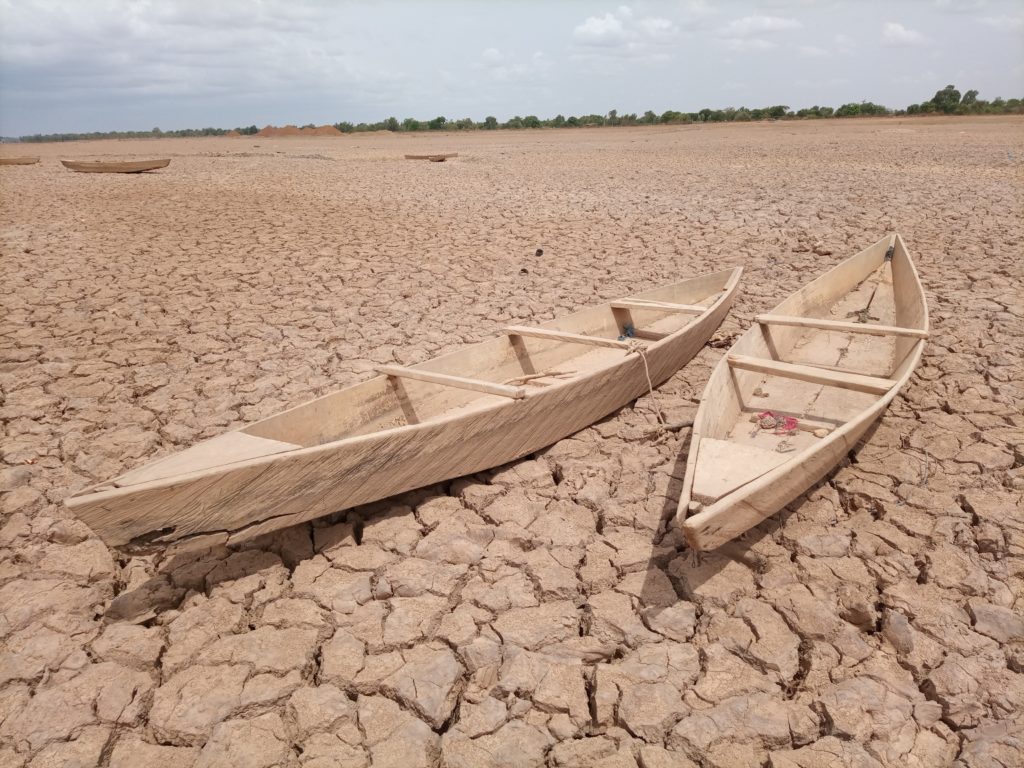
dried lake with canoes

An Ecosystem and Its Communities, Destroyed

One of the biggest problems caused by the desertification of the Aral Sea is the remaining salt from the evaporated lakewater. As more of the seabed is exposed, there is less water (and no vegetation) to brace wind gusts, causing salt — over 40 million tons now — to blow into surrounding towns and fields, polluting the air & soil. The wind also carries toxic dust containing fertilizers and pesticides from the fields, causing further pollution. The rapid change in the ecosystem also accelerated climate change, causing increasingly cold winters and hotter, drier summers.

Back in the 1960s, the Aral Sea was full of life. It hosted a booming tourism industry, and a fishing industry that provided 13% of the Soviet Union’s fish stocks. Millions of citizens relied on these industries; but when commercial cotton sucked up their most valuable resource, the industries evaporated, leaving inhabitants at a complete loss. The Aral Sea transformed from a cornerstone of the local communities, to their greatest burden.

While people overseas profit from cotton, these communities suffer from its effects. Increased salt has made the remaining water unfit for drinking, and has killed off the fish that citizens relied on for business and for food. Increased salt levels in the soil are also rendering the land unfit for any growth. Additionally, the fertilizers and pesticides in the constantly-swirling toxic dust cause horrifying health consequences, including: kidney diseases, respiratory issues, and cancer. While the environmental effects of this man-made disaster are evident, the suffering of these citizens is often overlooked.

To better visualize, watch this clip from BBC’s “Stacey Dooley Investigates: Fashion’s Dirty Secrets.” BBC took down the documentary, at the request of big brands who benefit from cotton production — But this quote captures Stacey’s relatable reaction to the issue:

“I feel like we understand what plastic does to the Earth…but did I know cotton was capable of this? Of course I didn’t. I had no idea.”
cotton plants in a field

A Steady Trickle of Hope

The shrinking Aral Sea is a cautionary tale regarding water conservation and responsible manufacturing; however, the story isn’t over. In 2005, the World Bank and Kazakh government created the Syr Darya Control and Northern Aral Sea Project, which is gradually restoring the lake’s water levels, decreasing salt levels, and reintroducing species of fish to help the Aral communities.

Some global brands are also helping to improve commercial cotton production: For example, Levi’s has started replacing cotton with earth-friendly hemp, and their new “Water<Less” technologies eliminate 96% of the water normally used during denim production. Stella McCartney is rethinking apparel production, by implementing sustainable methods in every step of their supply chain and partnering with the Ellen MacArthur Foundation to promote the need for circular economies.

These efforts are reducing society’s reliance on cotton at the highest level, but there are also ways for consumers to contribute.

What Can You Do?

First, get to know the cotton you’re buying. Organic cotton is better than normal cotton, because it requires less water and no pesticides. Buying Fairtrade cotton is also beneficial, because it ensures the use of ethical practices and protection of workers. Look for these labels when buying cotton products:

Next, demand that more brands use cleaner cotton. If a brand’s sourcing information isn’t publicly accessible, take action and contact them: through their website, on social media, or by email. If a product/brand does not use organic or Fairtrade cotton, consider finding a more sustainable alternative — Good On You’s Ultimate Guide to Fair Trade Fashion Brands is a great resource.

Furthermore, spread the word about the cons of cotton, as well as the impact of mismanaged sourcing & manufacturing. Like the shrinking Aral Sea, the negative effects of cotton production are usually out of our sight — so it is important that we as consumers educate ourselves on where and how our products are made. Our voices are strongest when we are informed and united. It’s up to us to highlight issues like the shrinking Aral Sea by weaving conscious consumerism into our lifestyles.

Filed Under: Make, Recent

“Kiss the Ground” Tackles Climate Change in Hopeful, Must-Watch Documentary

September 22, 2020 by Rayanne Piana Leave a Comment

2020 has been a year of reckoning. In a matter of months, we’ve faced record-breaking wildfires, increasingly harsh and frequent hurricanes, heatwaves, and more. Our environment is changing at a rapid pace and the thought of overcoming the challenges that face it feels overwhelming, even impossible.

But what if I told you the solution was right beneath your feet?

Kiss the Ground, a groundbreaking documentary available on Netflix September 22nd, explores the key ingredient that could be a game-changer in our fight to heal the planet – soil. The film reveals that we can stabilize Earth’s climate and restore entire ecosystems by regenerating the world’s soils.

How? Well, the idea is that we combat the effects of climate change by getting to the root of the problem, quite literally. Through biosequestration, excess carbon in the atmosphere gets drawn down into plants’ roots, then into the soil where it can be stored. But first, we need to start with regeneration by repairing the damage done to our soils by industrial agriculture.

“If we get the soil right, we can fix a lot of our issues. Healthy soils lead to a healthy plant. Healthy plant, healthy animal, healthy human, healthy water, healthy climate.”

– Ray Archuleta, NRCS Conservation Agronomist, Kiss the Ground (2020)

Kiss the Ground seamlessly interweaves the many factors that impact our environment, including climate, culture, politics, and more. Without sugarcoating the stark realities of the challenges we face, the film uplifts viable solutions that will better the planet for future generations. 

During a time when existential threats crowd our news headlines, Kiss the Ground delivers something often left out of the climate conversation – hope. In many ways, this documentary is just what the doctor ordered for 2020. It gives us a glimpse at the light at the end of the tunnel and provides a clear roadmap for how we will navigate towards a future of bright possibilities.

Most importantly, the documentary introduces audiences to the people working hard to put climate solutions into action. It features expert testimonies by leaders such as Maria Rodale of the Rodale Institute, conservation agronomist Ray Archuleta of the NRCS, and Paul Hawken, bestselling author of Drawdown.

Also featured are many faces you might recognize, including Vampire Diaries actor-turned-activist Ian Somerhalder, supermodel and executive producer Gisele Bundchen, NFL quarterback Tom Brady, and the film’s narrator, Woody Harrelson. 

Through the lens of a well-rounded cast of characters, Kiss the Ground manages to break down complex ideas like climate science and regenerative solutions, in a way that is both informative and deeply personal. For Ryland Engelhart, a producer on the film and founder of the non-profit by the same name, it’s always been personal.

Engelhart grew up on a 20-acre dairy farm in upstate New York, where his bond with nature began. Between running around barefoot in his family’s apple orchard, fishing in the nearby pond, and living off the land, he developed a deep connection to the Earth. Then and now, he believed in the spiritual interconnectedness of all life.

“Nature and humanity are all part of one great organism and each of us has a part to play in caring for this sacred bond.”

– Ryland Engelhart, Co-Founder & Executive Director of Kiss the Ground

In 2013, Engelhart was invited to a conference in New Zealand to participate in a panel where experts explored whether humans could sustain life on Earth. It was here that farming educator Graeme Sait introduced him to regenerative agriculture and the idea that if we could pull enough carbon out of the atmosphere and sequester it in soil, we could stabilize the climate.

“It was like all my chakras aligned,” he says, remembering his moment of clarity about the importance of regenerative agriculture. “I learned something so powerful and poignant that made me want to be a catalyst and an advocate.”

That same year, Engelhart met environmental filmmakers Josh and Rebecca Tickell completely by chance. He was moving into the Tickell’s former home in Venice and got to know the Sundance award-winning filmmakers during the process of their moveout. He asked if they wanted to collaborate on a documentary about the regenerative powers of soil, and they initially turned him down. As it turns out, it’s not easy pitching dirt. 

In the following months, Engelhart continued to gather people in his Venice living room to discuss regenerative agriculture, biosequestration, and climate solutions. These conversations would become the foundation of what is now the non-profit organization, Kiss the Ground. Before the end of the year, the Tickells got back in touch with him to pick up the partnership.

Fast forward to 2020, and Kiss the Ground is an official selection of the Tribeca Film Festival and is available to millions of viewers worldwide through Netflix. Engelhart describes this moment as exciting, joyful, and fulfilling. He hopes that people walk away feeling optimistic about the path forward. He also hopes it provides viewers the same moment of clarity he experienced all those years ago about our symbiotic relationship with nature.

“What we put in our bodies is connected to nature. If we’re putting toxicity into the earth, we’re putting toxicity into our bodies,” he said. “We’re at a very divided place in human history. If we want to heal our bodies and our civilization, we have to start with our soil.”

This film is a labor of love, a manifestation of the decision a young Engelhart made to make his life and work an expression of love (the phrase “Be love” is tattooed onto his forearm in case he ever forgets). 

Kiss the Ground so clearly embodies this mission. It reminds us that the action we take to heal the Earth is an expression of love, for the planet and for each other.

“Let the beauty we love be what we do. There are hundreds of ways to kneel and kiss the ground.”

― Rumi

Watch Kiss the Ground, available on Netflix today. 

Filed Under: Eat, Recent Tagged With: agriculture, biosequestration, documentary, film, land stewardship, netflix, regenerative

Zero Emissions Day: How You Can Be Part of the Solution

September 20, 2020 by Neil Sahota 1 Comment

On September 21st, I will:

  1. Not use any oil, gas, or coal
  2. Minimize how much electricity I use
  3. Not expect any emergency services to change how they operate
  4. Have fun and enjoy this special day! 

These are the goals of Zero Emissions Day (ZeDay.) It doesn’t sound too bad right? Yet, if everyone did these four things for this one day, the impact on our planet would be profound! We have already seen how being in lockdown during Covid-19 gave the Earth the chance to heal itself. Considering everything the planet provides for us, isn’t it worth giving it one day off? This is actually the goal of ZeDay.

Back on March 21st, 2008, Sealevel called for a moratorium on fossil fuel usage for Sep. 21st so that we could give the Earth a day off. Just as people need a day of rest, so does the planet to give it a chance to recharge. ZeDay, though, would be more than just a vacation day for the Earth. It is also an opportunity for people (i.e. us) to reflect on how we impact the planet and find ways to reduce our carbon footprint with big or small changes. In effect, we created a moment of pause to innovate and find ways to convert the tools that are hurting our atmosphere into solutions that help improve climate impact. 

For many of us, it is hard to understand the depth of the greenhouse gas problem unless we feel the pain every day. Thankfully, people like Dr. Jonathan Foley are helping us relate to the problem, but more importantly, is giving us solutions to help fight the negative impact of carbon emissions. More importantly, organizations like Planet Home are providing a platform for us to find that set of solutions that each person is willing to do to help the planet. Interestingly, Planet Home’s approach is based on the same principle that set ZeDay on September 21st: balance.

September 21st has many important meanings. It is the United Nations International Day of Peace. More importantly, September 21st is autumnal equinox, the day when the length of daylight and night are equal, both in the Northern and Southern Hemisphere. This is balance. Just like we need to balance our consumption and preservation of the Earth’s natural resources. Like we need to balance our carbon emissions so that we’re not radically changing the atmospheric conditions of the planet.

This is what ZeDay gives us: balance. While the Earth gets its vacation day, ZeDay also helps instill a sense of mindfulness on what things each of us can do to help the planet. Maybe it is bike to work more often. Perhaps, it is adopting a houseplant. Or maybe it is giving ourselves an hour a day of no electricity use, even with our mobile devices. At the end of the day, there is at least one small thing each of us is willing to do to help reduce our carbon footprint. ZeDay gives us a chance to reflect on what things we are willing to do, every day of the year. While it might be a small change, imagine how that gets amplified when one billion people are making a small change with you. That’s moving the needle on carbon emissions!

Ultimately, each one of us is responsible to manage our resources effectively and realize that an energy-consuming attitude will destroy our delicate environment. It is no longer enough to not be energy gluttons; we must actively be anti-carbon emissions. This is what the celebration of ZeDay is all about. I hope you will join me in horning Zero Emissions Day, so we can all be solutionists in preserving our atmosphere!

Filed Under: Live, Recent Tagged With: carbon emissions, greenhouse gases

Happy Anniversary, Planet Home Community!

September 19, 2020 by Antony Randall Leave a Comment

Dear Planet Home Community,

Last September, we gathered at the Palace of Fine Arts in San Francisco where we shared an unforgettable experience. On our one-year anniversary of Planet Home 2019 Experience, the nostalgia is setting in and we can’t help but look back and feel inspired by the memories we shared.

We brought together brilliant minds from different backgrounds, disciplines, and generations to collaborate on world-changing ideas. We shared eye-opening conversations, discussed revolutionary innovations, and thought of new ways to heal the planet. We danced, we laughed, and we sang! Together, we created something special that inspired us all to go out into the world and make it a better place.

For that, we just wanted to take the time to say THANK YOU and Happy Anniversary! We wouldn’t be where we are today without our supportive and inspiring community.

Here’s a look back at the Planet Home 2019 Experience:

A year later, the world has turned upside down. Between the record-breaking wildfires, hurricanes, and heatwaves, it is clear that our Planet Home needs us more than ever. But if there’s one thing we learned from you all last year, it’s that we do have solutions to meet the needs of this moment and we can do this – together. In fact, that message might be even more powerful today than it was then.

If it weren’t for the pandemic, we might all be gathered together again today for the Planet Home 2020 Experience. Although we have to be apart for the time being (at least six feet apart, anyhow), our collective movement grows stronger each day. No matter the circumstances, the work continues. We continue to create and collaborate. We continue to innovate. We continue to culture solutions.

Thank you for being on this journey with us and for continuing to do the work that you do. No matter what lies ahead, we know that with our community of solutionists (including you!) leading the way, our Planet Home is in good hands.

With love and gratitude,

Antony Randall & Gabrielle Hull, Co-CEOs

Filed Under: Recent

It’s World Cleanup Day! Join this challenge to make an impact.

September 18, 2020 by Rayanne Piana Leave a Comment

Whether it’s a candy wrapper in the street or an abandoned plastic bottle at the beach, we’ve all seen trash in places it shouldn’t be. Littering is a common issue in communities all across the globe and it affects our ecosystems and wildlife. Each of us is responsible for doing our part to create a cleaner world.

This weekend, be part of the change by celebrating World Cleanup Day on September 19. 

How to get involved:

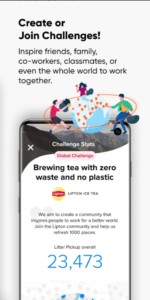
This year, Ted-ED and the Alliance To End Plastic Waste teamed up with Litterati to create the All_Together Global Cleanup challenge. 

Download the Litterati app to you join 150,000 people in 117 countries in a global cleanup. All you have to do is take a photo of the litter you pick up, and the app will tag the location and type of litter. Not only can you track your personal impact, but you’ll be able to see litter others pick up in your local area. Make a difference and get inspired by your community!

Also, to add an educational component to this campaign, TED-Ed created 11 online lessons that you can explore. These resources help you understand how plastic waste affects the planet and how you can take action.

Finally, share your impact on social media using the hashtag #AllTogetherCleanup on Instagram, YouTube or Twitter. Your post could be featured on the community wall of the TED-Ed website.

The app that makes it fun to pick up litter:

Years ago, Jeff Kirshner started taking Instagram photos of the litter he picked up. At first, it was just an interesting way to capture trash through an artistic lens. Photos have the ability to tell a story about our waste problem, bringing an issue that is too often “out of sight, out of mind” to the forefront.

But, it wasn’t long before Kirshner realized the true potential of his photo project. He realized that the timestamps and geo-tagging of photos create a valuable dataset. By documenting cleanup efforts through photos, we could gather valuable data including time, date, location and type of litter. We could then use this data to better understand the specific details of their waste problem, allowing us to create customized solutions and track our progress.

“I started to think, how do you empower people to be part of the solution?” he said, “And how do we collect data that drives those changes?”

So, the idea for the Litterati app was born. Kirshner and his team set out to create a tool that would allow us to build a public database that would provide valuable insights to governments, organizations, and corporations. Also, they sought to create a platform that builds community by helping individuals feel connected to a collective cause driven by like-minded others.

Kirshner describes Litterati’s areas of impact in three P’s: policy, packaging, and personal impact.

Policy

The data collected by the app can help policymakers in cities across the globe accurately understand the factors contributing to their waste problem, so that regulations could be adjusted to create an effective solution. For example, in San Francisco, Litterati’s data was used in court as evidence of the amount of litter created by cigarettes. This then led to the city doubling of the tax on cigarettes and thus increasing San Francisco’s budget for cleanup efforts.

Packaging

Litterati also hopes that it can help businesses make better, more sustainable decisions about their packaging. If brands could be made aware of how their products are affecting the environment and to what scale, they could identify the ecological, ethical, and economic incentives for improving their packaging.

Personal Impact

Last but not least, Litterati helps its community members track, share, and celebrate their personal impact. We don’t always realize how our everyday actions can make a difference, but it helps to have a place to track your actions and see how they build up over time. Recently, one Litterati member celebrated the incredible milestone of picking up 100,000 pieces of litter.

“We’re one piece of the bigger puzzle. It’s really about capturing the hearts and minds of people and empowering them with the tools they need to make a difference.”

Jeff Kirshner, Founder and CEO of Litterati

8 years since its beginning, Litterati has recorded over 6.5 million pieces of waste collected all around the world, growing at 10,000 pieces per day. This weekend, during the All_Together Global Cleanup challenge, they expect to record 1 million pieces of litter.

Get involved and help make the world a cleaner place! Download the Litterati app today from the App Store or on Google Play.

Filed Under: Recent Tagged With: challenge, cleanup, waste

Why You Need a Reusable Face Mask

September 18, 2020 by Antony Randall 1 Comment

In March, when the whole world came to a halt, for a moment it seemed like COVID-19 was going to have somewhat of a positive effect, at least on the environment. Pictures flooded the internet of Venice experiencing clean canals, cities with clear skies and airports being virtually empty. 

But now, the world is back with an environmental crisis on our hands. 

What’s happening?

With the spread of COVID-19, the need for personal protective equipment (PPE) has skyrocketed in 2020. The US alone has estimated that there will be 3.5 billion medical grade masks required in the first year of the pandemic. The UK has already distributed 1 billion items of PPE.

Though this is crucial to the health and safety of citizens worldwide, especially frontline workers, it has contributed to large disposal of single-use items, namely masks, gloves and gowns.

But how bad is it really?

The excessive use of plastics is one of the largest environmental concerns here in the US. The United States represents 4% of the world’s population yet it produces 12% of the world’s solid waste. In 2015, the Environmental Protection Agency (EPA) reported that the US produced 262 tons of waste of which 13% was plastics. Even the recycling rate of plastics fell to 8.4% last year, clearly establishing this as an immediate priority. 

The issue isn’t just local. It is a huge priority overseas with many global organizations taking the first steps towards a cleaner future. The US seems to be lagging behind in its progress, though. Just last year at a UN conference in Nairobi, the US was accused of blocking global action against plastic pollution despite their global commitments. President Donald Trump is especially a huge supporter of plastics, even though big conglomerates are attempting to run more green enterprises.

Climate change is a very status quo issue despite the image of a post-apocalyptic future it tends to conjure. A senior analyst at the global risk consulting firm Verisk Maplecroft told The Guardian that “We have enough plastics in circulation to really cause disruption of marine food webs, which is already in process. I think what we need to be working towards is almost a zero-material-footprint kind of society.” This year, though, the US has only taken steps in the opposite direction.

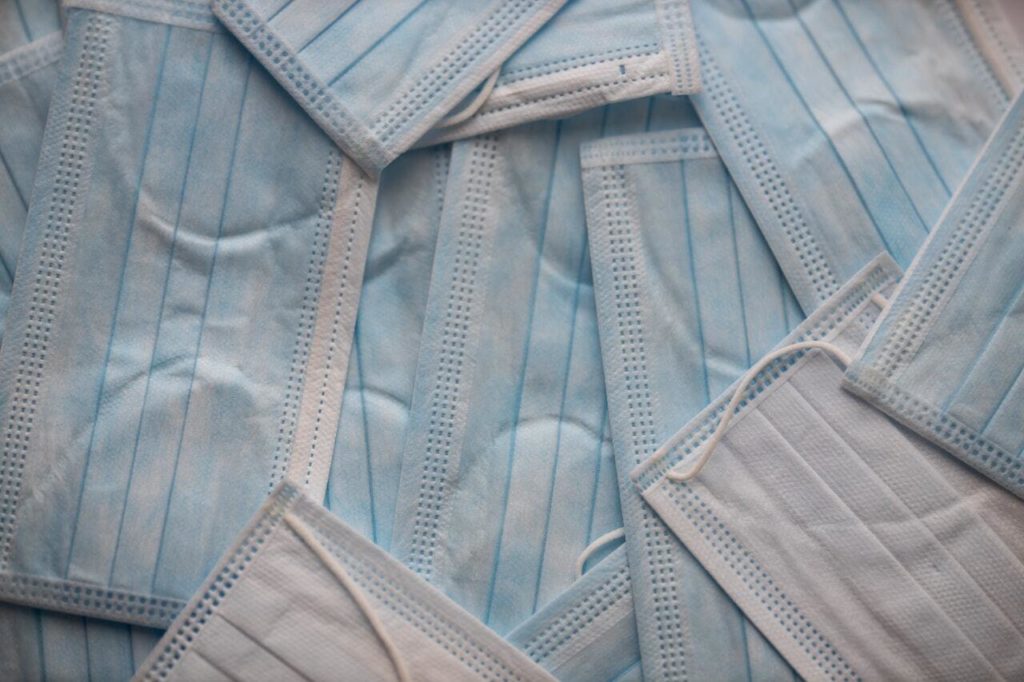
pile of surgical masks

Environmental impact of PPE

COVID-19 initially led the world to have a somewhat positive output with the largest annual fall in carbon dioxide emissions predicted to take place since people are traveling less and much of big industry has cut its spending. However, these positive effects were short-lived after it was found that use of this PPE has begun to exacerbate the massive global problem of climate change.

With most equipment made of plastic, such as single-use masks being made of polypropylene, it is no secret that PPE is creating waste-related environmental impacts worldwide. Images have already begun to surface of birds with their feet being caught in mask straps and gloves which have been floating in the oceans.

In the US, this has become even worse as some places have halted their recycling programs. Without proper disposal, the US risks offshoring more of our garbage globally and circulating post-consumer plastic waste.

In China, where the crisis has already peaked, the Wuhan municipal government is set to build a medical waste disposal facility to process existing waste from the pandemic outbreak and also help prevent pollution incidents. 

A French non-profit organization, Opération Mer Propre, which regularly picks up litter along the French coast, began voicing their concerns in May after they noticed hand sanitizer bottles, masks, and gloves beneath the Mediterranean sea waves. Their director of operations remarked that because the French government had given out 2 billion disposable masks, there was the risk that there would be more masks than jellyfish in the ocean.

The problem is simple: if we don’t actively work towards finding cleaner solutions in our pandemic recovery process, the whole world is bound to suffer excess pollution and climate consequences.

What can we do?

The good news is, not all hope is lost! Despite all of these environmental concerns surrounding the use of personal protective equipment, there are some very easy changes that can help make your lifestyle more eco-friendly.

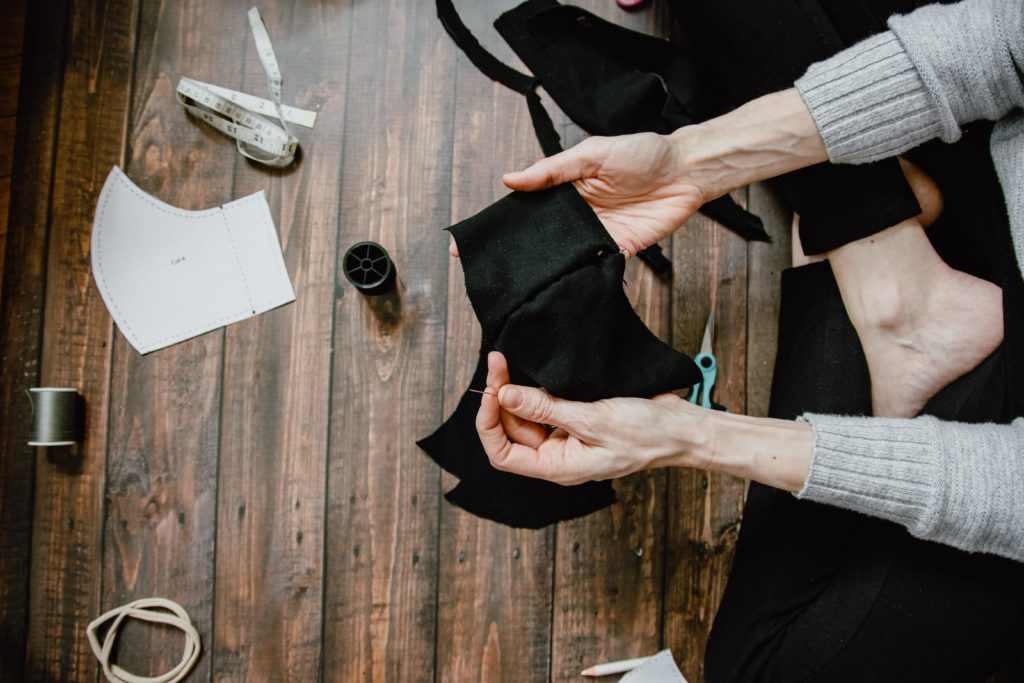
hands holding a reusable cloth facemask

1. Opt for reusable masks.

The World Health Organization (WHO) has now recommended that people wear masks whenever going to areas with high population density or those areas where social distancing cannot be maintained. However, a reusable mask provides an eco-friendly alternative to the disposable masks which are polluting the environment. With tutorials filling the internet over the past few months and some designs making it into the latest fashion trends, cloth masks are easy to make and help be eco-friendly. Plus, they are usually more cost-effective too! 

2. Care for your mask.

To ensure your mask lasts long, make sure you are appropriately washing your masks and have a few on standby so that you are able to wear a clean one on a daily basis. It ensures your safety and also helps prevent excess wear and tear in your mask. The CDC recommends that masks be “washed routinely depending on the frequency of use” which tends to mean it should be washed after each use.

3. Try using a face shield. 

When worn with a cloth face mask, a face shield has the ability to provide an extra layer of protection against COVID-19. Because these are made of plastic and can easily be wiped down after each use, they reduce waste and pollution and keep the environment healthy. 

4. Cut straps of masks before disposal.

In some instances, such as when going to a medical facility, wearing a disposable mask is unavoidable. Though this will still create waste, advocates are asking people to cut off the side straps before disposing of them. This ensures that small birds and other wildlife do not get tangled in them and helps protect wildlife.

When each of us pitches in to take these small steps, we can help ensure that as the world heads towards COVID-19 recovery, the environment recovers, too. 

Filed Under: Make, Recent Tagged With: coronavirus, waste

  • « Go to Previous Page
  • Page 1
  • Interim pages omitted …
  • Page 48
  • Page 49
  • Page 50
  • Page 51
  • Page 52
  • Interim pages omitted …
  • Page 54
  • Go to Next Page »

Primary Sidebar

Recent Posts

  • PLANET HOME Announces $1 Million Tough Tech Prize at Inaugural Gala During Tough Tech Week
  • Planet Home and DataEnergy are solving the Green Computing Dilemma with Renewable AI Infrastructure
  • The Great AI Scale-Up: Balancing Compute Power with Planetary Boundaries
  • The Algorithm’s Bargain: Is AI Really for Good?
  • Code, Culture, and Creation: How AI is Remixing Entertainment’s DNA

Recent Comments

  • Liam Jacobs on Fricken’ Flying Taxis: The Future of Travel is Closer Than You Think
  • Izabella Bauer on The Pressing Plastic Problem
  • Broderick Ruiz on The Pressing Plastic Problem
  • Cherish Velez on The Pressing Plastic Problem
  • Anika Scott on The Pressing Plastic Problem

Archives

  • November 2025
  • April 2025
  • February 2025
  • January 2025
  • June 2022
  • April 2022
  • March 2022
  • February 2022
  • January 2022
  • December 2021
  • November 2021
  • October 2021
  • September 2021
  • August 2021
  • July 2021
  • June 2021
  • May 2021
  • April 2021
  • March 2021
  • February 2021
  • January 2021
  • December 2020
  • November 2020
  • October 2020
  • September 2020
  • August 2020
  • July 2020

Categories

  • AI
  • Community
  • Eat
  • energy
  • Featured
  • Live
  • Make
  • Move
  • Network
  • Press
  • Recent
  • Solutionist 100
  • Solutionists Making Moves
  • Solutions

Meta

  • Log in
  • Entries feed
  • Comments feed
  • WordPress.org

Design

With an emphasis on typography, white space, and mobile-optimized design, your website will look absolutely breathtaking.

Learn more about design.

TRENDING NOW

  • PLANET HOME Announces $1 Million Tough Tech Prize at Inaugural Gala During Tough Tech Week
  • Planet Home and DataEnergy are solving the Green Computing Dilemma with Renewable AI Infrastructure
  • The Great AI Scale-Up: Balancing Compute Power with Planetary Boundaries
  • The Algorithm’s Bargain: Is AI Really for Good?
  • Code, Culture, and Creation: How AI is Remixing Entertainment’s DNA

NEVER MISS A SOLUTION!

Sign up for our mailing list to stay up to date on planet saving solutions, news, and events from PLANET HOME!


BROWSE BY TAGS:

action carbon carbon emissions circular economy coronavirus eat education energy environment esg events fashion finance food green holidays industry lifestyle live make material science move music nature ocean oceans ocean stewardship planet plant-based plastic profile recycling s100 solutionist solutionists solutions sustainability tech technology tiktok transportation vegan waste water wildlife
Locations
Resources
Legal

Footer

Locations
Resources
Legal
  • Facebook
  • Instagram
  • LinkedIn
  • Pinterest
  • Twitter
  • YouTube
  • San Francisco
  • Los Angeles
  • New York
  • About PLANET HOME
  • Contact
  • Media
  • Employment
  • Terms of Use
  • Privacy Policy
  • Press

©2021 Planet Home. All rights reserved.
Use of and/or registration on any portion of this site constitutes acceptance of our User Agreement (updated 5/25/18) and Privacy Policy and Cookie Statement (updated 6/8/21) Your California Privacy Rights. The material on this site may not be reproduced, distributed, transmitted, cached or otherwise used except with the prior written permission of PH.

This website uses cookies to improve your experience. We'll assume you're ok with this, but you can opt-out if you wish. Cookie settingsACCEPT
Privacy & Cookies Policy

Privacy Overview

This website uses cookies to improve your experience while you navigate through the website. Out of these cookies, the cookies that are categorized as necessary are stored on your browser as they are essential for the working of basic functionalities of the website. We also use third-party cookies that help us analyze and understand how you use this website. These cookies will be stored in your browser only with your consent. You also have the option to opt-out of these cookies. But opting out of some of these cookies may have an effect on your browsing experience.
Necessary
Always Enabled
Necessary cookies are absolutely essential for the website to function properly. This category only includes cookies that ensures basic functionalities and security features of the website. These cookies do not store any personal information.
Non-necessary
Any cookies that may not be particularly necessary for the website to function and is used specifically to collect user personal data via analytics, ads, other embedded contents are termed as non-necessary cookies. It is mandatory to procure user consent prior to running these cookies on your website.
SAVE & ACCEPT