• Skip to primary navigation
  • Skip to main content
  • Skip to primary sidebar
  • Skip to footer
Planet Home

Planet Home

Culture Solutions

  • ECOSYSTEM
    • EAT
      • Food Security & Production
      • Land Stewardship
      • Ocean Stewardship
      • Health + Wellness
    • MAKE
      • Circular Economies
      • Green Manufacturing
      • Material Science
      • Regenerative Ecosystems
    • MOVE
      • Clean Transport
      • New Fuel Sources
      • Virtual Connections
      • Ecological Explorations
    • LIVE
      • Sustainable Communities
      • Biodiversity
      • Atmospheric Conditions
      • Renewable + Equitable Energy
  • VENTURE STUDIO
  • LABS
  • EVENTS
  • ARTICLES
    • Featured
    • Network
    • Press
  • Menu bars
  • COMPANY
  • VENTURE STUDIO
  • LABS
  • ABOUT
  • CONTACT
  • NETWORK
  • ECOSYSTEM
  • COMMUNITY
  • MEDIA
  • VIDEO
  • PHOTO
  • PRESS
  • Podcast
  • EVENTS
  • ALL
  • 2019 SUMMIT
  • 2017 SUMMIT
  • Terms of Use
  • Privacy Policy
  • Facebook
  • Instagram
  • LinkedIn
  • Pinterest
  • Twitter
  • YouTube

Bestselling author Steven Kotler explains why he’s optimistic about the planet’s future

Bestselling author Steven Kotler explains why he’s optimistic about the planet’s future

October 27, 2020 by Rayanne Piana Leave a Comment

Steven Kotler is a man of many accomplishments. He’s a New York Times bestselling author, an award-winning journalist, and a two-time Pulitzer nominee. He’s a prolific storyteller, an entrepreneur, and, as Forbes put it simply, he’s “a unique guy.” But here at Planet Home, we also know Kotler as one of the main characters of our origin story.

Searching for a Solution

In 2017, Kotler had already been working in the environmental space for twenty years. He was working through an idea he had to bring together minds from the tech industry and the environmental world to develop technology-based solutions that would address the challenges faced by our planet. 

“There was a real advantage I saw in this crossover. The environmental problems we’re trying to solve need technology, and technology can help us scale environmental solutions in a way that would meet the needs of this moment,” Kotler said. “I wanted to create something that would help bridge that gap.”

Another question on his mind, “How do I bring the environmental message to more people?” 

The answer, as it turned out, would be discovered through the collision great minds with different perspectives

Discovering Synergy 

That year, a mutual friend introduced Kotler to Antony Randall, an world-leading director, producer and engineer in the entertainment and non-profit spaces,  who was working on a similar vision from a different angle. Randall had read Kotler’s book, Abundance, which Elon Musk once described as “essential reading for anyone looking for a better tomorrow.”

Kotler and Randall, along with Planet Home’s co-founder Gabrielle Hull and our now chief solutions officer Robert Suarez, began to collaborate on an idea that they hoped would bring us closer to that better Living. Over the next few years, this concept would grow into what Planet Home is today. 

“There was a little bit of a relief,” Kotler remembers of those early conversations with the group. “When you meet like minded people who are solving the same problems and share the same ambitious vision, you think, ‘Okay, I’m not crazy!’”

As accomplished professionals of different industries, the group took a multidisciplinary approach, leveraging the range of their expertise. 

“There was a lot of synergy. It was a bunch of people looking at the same problems from different angles, coming up with solutions we each couldn’t have executed alone,” Kotler said. “We had all been trying to solve environmental issues in our lanes. Through our combined experience, we had a clear idea of how to do this right.”

In many ways, the group’s collaborative approach to problem-solving set the tone for what the greater Planet Home community would become – a collective of solutionists from diverse backgrounds, coming together to solve the planet’s biggest challenges from every angle.

Steven Kotler speaking at Planet Home event in 2017

The Evolution of Planet Home

By August of 2017, the group had hosted its first event in Tahoe, California with 6,000 attendees. Two years later, Planet Home 2019 had grown into a full three-day festival with over 10,000 attendees packed into the San Francisco’s Palace of the Fine Arts. Kotler remembers the first event as proof of concept, while the 2019 event proved the possibility of bringing this platform to new heights and bigger audiences. 

One memory from Planet Home 2019 comes to mind that, for Kotler, summarized his whole experience at the event. He was standing beside the main stage with Amanda Ravenhill, Planet Home’s program director, speaker, and community leader. The two were watching Bill Nye, one of the event’s featured speakers, receive a standing ovation. 

“It was incredible, the applause went on for five minutes and just got louder and louder,” he said. “It was a rockstar moment, unlike anything I’ve ever seen. You would have thought Metallica was on stage, not some science guy.” 

Beside him, he remembers, Ravenhill jumped with glee and grabbed his shoulders. “We’re winning! We’re winning!” she said.

Kotler thought back to his days as a journalist in the 90s, how difficult it was to get publications to cover environmental issues, and how isolated he felt in pursuing this cause. Then, to witness a massive crowd cheering for science at a festival dedicated to environment solutions, it absolutely felt like a win. 

“It was so lonely for so long doing this work that, to see something like that, it was special,” he said. “It’s awesome to see how many more people are involved in this conversation today.” 

Steven Kotler speaking at Planet Home 2019

Going with the Flow

More people than ever before are concerned about the planet’s well-being. Studies show that, in the last seven years alone, global concern around environmental issues has risen by an average of 13%. In some countries, concerns have risen by as much as 30%.

But what has sustained this cultural shift over the past few decades? Can we harness this same energy to drive change in the next decade?

Yes, and the key ingredient, according to Kotler, is flow. As Executive Director of the Flow Research Collective, Kotler describes flow as our biologically built-in ability to achieve peak performance in the face of great challenges. Flow amplifies focus, creativity, and productivity. Kotler says that flow can make the impossible, possible by unlocking human potential at both the individual and collective levels. 

Given the range and magnitude of our planet’s challenges today, it may often feel like we have an impossible task on our hands. But, Kotler explains that evolution shaped humans to perform at our best flow, especially when our survival calls for innovation.

“Flow amplifies everything you need to innovate, be creative, and make more resources, which is exactly what we would need to solve grand environmental challenges,” he said. “It also amplifies empathy and environmental awareness. This allows you to fully appreciate the world and feel connected to it. If you feel like the world is separate from you, you’re not going to be able to fix it.”

The Path Forward

With the COVID-19 pandemic upending our day to day lives, many of us may feel all but “in flow.” But, Kotler believes that this year has actually provided us new advantages.

“First, we all got a close look at what an exponential problem looks like,” he said. Before, exponential issues like climate were difficult for many to understand or fully realize.  “Now, we also know what an exponential solution to an exponential problem looks like. That’s something we can carry over into the conversation around the planet’s health.”

The pandemic also reminded us of the good that can happen when we work together to take care of each other during trying times. Kotler is optimistic that this lesson is one we will carry forward.

“COVID showed us that we can cooperate at a global level in a non-wartime situation,” he said. “In January, there were 0 vaccines. Then, nations and scientists collaborated like never before and now 150 vaccines are in development. We showed that global cooperation is possible and it gets results.”

Although many of us are uncertain what new normal awaits us in the near future, we have the opportunity to reshape the world and the way we live in it for the better. Kotler is hopeful that better days are ahead of us and, if we take action, a greater tomorrow is within reach.

“Whatever comes on the other side of this, it’ll have more social justice and more environmental justice than anything we’ve seen previously. We have a chance to re-boot the economy in ways that are good for the planet,” Kotler predicts. “It’s just a question of will and effort and, together, I know we can do it.”

Filed Under: Recent

How to go plant-based on a budget

October 27, 2020 by Mackenzie Riley Leave a Comment


When I started my first year of college, I decided to adopt a plant-based lifestyle. I was surrounded by new people, broke, and a thousand miles away from my mom’s cooking, so I figured it was the perfect time to make the switch. 

A year later, I’m very proud of myself for making this switch and couldn’t imagine my diet any differently. The past year has been a difficult process of learning what fits in my budget, what is good for my body, and above all, what satisfies me. 

Most people in my situation would have never considered changing to a plant based diet. I had recently moved to Washington D.C. to attend American University and was extremely dependent on my college’s dining plan. Still, for the first time in my life I was surrounded by people who shared my passion for the environment and quickly learned the importance of plant-based living. 

For me, not eating meat was more so about how it made me feel and the effects it has on our planet. I noticed that every time I ate a serving of meat I was sluggish, bloated, and unsatisfied. I also began researching the effects the meat industry has on the environment.

via GIPHY

Plant-based grocery shopping 

I’m the first to fall victim to creative plant-based marketing, and new vegetarian products, often costing me way more than I planned on. I’ve learned that before buying a new plant-based product to do my research beforehand. There’s a whole community of vegetarians that give reviews on products, so take advantage of them! 

While I love veggie nuggets, I would recommend to anyone becoming a vegetarian on a budget  to not rely solely on meat alternatives. These products are a great source of protein, but they are very expensive and don’t offer a full range of nutrients. Buying unprocessed, natural foods like potatoes, beans, and vegetables you are able to make a wide variety of recipes, but also nourish your body. Frozen fruits and vegetables have truly been my life saver as they cost less and do not go bad as quickly.

via GIPHY

Meal prepping and recipes 

Meal prepping is also an important habit to adopt. Every week I try to plan at least three different meals and always double my recipe so I have leftovers. This is the perfect balance for me because I do not overspend at the grocery store, but I also have enough flexibility to fill in with other meals, so I do not get sick of the same thing everyday. 

My go-to has become a greens and grains bowl, brown rice and spinach as my base, tofu or beans as my protein, with shredded cheese, and other vegetables. This meal always fills me up and I’m able to switch up my bases and proteins to make sure I’m not getting too sick of eating the same thing. 

When building a meal it is important to try and feature as many food groups as possible. Every meal should include protein, healthy fats, vitamin B12, calcium and vitamin D, iron, and complex carbohydrates. This may seem like a long list of nutrients, but most of these things are in the foods we already eat. My favorite way to get health fats is by adding avocado or hummus to my meal, this not only gives it a boost in flavor but also keeps your body nourished. 

via GIPHY

Why you should make the switch

The production of meat products is extremely water intensive, beef has a water footprint of 15,415 liters per-kg. Our planet is already extremely water depleted and trends such as this will continue to drain our resources. In addition to this, livestock is one of the biggest contributors to land depletion and deforestation. Grazing and cropland dedicated to animal feed account for around 80% of all agricultural land. One of the most shocking effects of meat production on our environment is its ties to greenhouse gas emissions. It’s extremely difficult to track the precise amount of greenhouse gases that can be linked to the meat industry, but three of the top meat companies–JBS, Cargill, and Tyson–had more greenhouse gases emissions than the entire country of France in 2016. 

A vegetarian diet also has numerous benefits for your health. Since vegetarians consume less animal fats, they are at a much lower chance of developing cancer and coronary heart disease. Also plant-based living is also an effective way to fight obesity. A vegetarian diet is high in nutrients and complex carbohydrates and low in saturated fats and processed foods. A study conducted by Dean Ornish found that a vegetarian diet can, on average, lead to a loss of 24 pounds in a year, and help keep that weight off five years later. 

via GIPHY

Where to start

One of the most important things I’ve learned on this journey is to not be too hard on myself. When I first started being a vegetarian I was very not getting enough protein or iron, and my body felt this. Instead of giving up completely I pushed myself to find a way to maintain my health. 

If I could offer one piece of advice to any one considering a vegetarian diet it would be to go for it. Whether it’s just participating in Meatless Mondays, or a complete lifestyle change–just try it. Being vegetarian has truly changed my life, I’m in the best shape of my life, I’m eating better, and I’m doing my part to find a solution for the climate crisis. 

Cutting out meat may seem impossible at first, but when you start taking it seriously you will be surprised by the number of resources available to you. There are thousands of Facebook groups dedicated to sharing vegetarian and vegan recipes, there are communities of people that want to help you on this journey. Do not be afraid to take that first step in being a part of the solution. 

Filed Under: Eat, Recent Tagged With: vegan, vegetarian

5 Delicious Fall Baking Recipes You Need to Try (Vegan-Friendly!)

October 26, 2020 by Antony Randall Leave a Comment

Plant-based eating is not only good for your health and the planet, but it can be delicious, too! Eating plant-based can seem like a daunting task, however this list will show you how it can easily be made affordable, simple, and tasty.

I have experimented with many different vegan recipes, so I’m here to share with you some of my personal favorites. This article will focus on baking, which is the perfect activity for keeping cozy this fall. I personally recommend using organic ingredients whenever you can. It’s just a little extra step I take that has health benefits for me and the environment, too!

Vegan Snickerdoodles:

The first recipe is going to be your classic snickerdoodle, but with a plant-based twist. These snickerdoodles are delicious, with cinnamon and sugar to brighten up your day!

Ingredients:

  • 1 and ⅓ cup all-purpose flour (if gluten-free is desired, use gluten-free oat flour)
  • ½ teaspoon baking soda
  • ¼ teaspoon baking powder
  • ½ teaspoon salt
  • ¾ cup white granulated sugar
  • ½ cup applesauce
  • 1 ripe banana, mashed
  • 1 teaspoon vanilla extract
  • ½ teaspoon almond extract (not necessary but adds to taste)
  • ¼ cup white granulated sugar
  • Cinnamon

Instructions: 

1) Preheat the oven to 365 degrees Fahrenheit.

2) Mix the flour, baking soda, baking powder, salt, and ¾ white granulated sugar into a bowl until fully mixed.

3) Mix mashed banana, applesauce, vanilla extract, and almond extract thoroughly in a separate bowl.

4) Pour the wet ingredient mixture into the dry ingredient mixture until it is fully mixed. Add more all-purpose flour slowly, if the mixture is too wet to be rolled into balls, until it is easily handled.

5) Mix ¼ cup white granulated sugar with cinnamon to taste in a small bowl. Roll small balls of dough in the cinnamon-sugar mixture and press flat on a lined baking sheet. Continue with this until all the dough is used. 

6) Bake for 9-12 minutes and enjoy while warm.

7) Store in a sealed container for later consumption.

Raspberry Blondies:

This recipe is my personal favorite! They’re the perfect blend of tart and sweet.

Ingredients:

  • 1 ripe banana, mashed
  • 1 cup all-purpose flour (if gluten-free is desired, use gluten-free oat flour)
  • 3 tablespoons of peanut butter (if you have a nut allergy, use sunflower butter instead)
  • 2 tablespoons of pure maple syrup
  • ½ cup of almond milk (if you have a nut allergy, replace with soy milk or oat milk)
  • ½ tablespoon baking powder
  • ⅓ cup raspberries (frozen is perfectly fine!)

Instructions:

1) Preheat the oven to 350 degrees Fahrenheit. 

2) Mix the peanut butter with all other ingredients except the raspberries until thoroughly combined. Break the raspberries into small pieces.

3) Mix the raspberry pieces into the batter.

4) Pour into an 8” by 8” baking dish.

5) Bake for 20-30 minutes until a toothpick comes out clean. 

6) Let cool and enjoy!

Pumpkin Mug Cake:

Next up are some simpler, single-serve treats for when you’re busy and want to satisfy that craving in record time. The first is a very fall recipe, a pumpkin mug cake! Cheap, easy, and fall-tastic!

Ingredients:

  • 2 tablespoons all-purpose flour (if gluten-free is desired, use gluten-free oat flour)
  • ⅛ teaspoon baking powder
  • 2 tablespoons white granulated sugar
  • 1 tablespoon pumpkin puree
  • 2 tablespoons of almond milk (if you have a nut allergy, replace with soy milk or oat milk)
  • ½ tablespoon applesauce
  • ⅛ teaspoon cinnamon

Instructions:

1) Mix all the dry ingredients in a microwave-safe bowl or mug.

2) Mix in the wet ingredients until all smoothly combined.

3) Microwave for 1 minute. If it comes out damp on top, keep adding 15 seconds on the microwave until it’s dry.

I love this recipe and I make it all the time! It’s so easy and a great snack or dessert any time of the day.

Gooey Mug Cookie:

Ingredients:

  • ¼ cup all-purpose flour (if gluten-free is desired, use gluten-free oat flour)
  • ½ teaspoon baking powder
  • 1 tablespoon almond butter (if you have a nut allergy, use sunflower butter instead)
  • ¼ cup almond milk (if you have a nut allergy, replace with soy milk or oat milk)
  • 3 tablespoons of pure maple syrup
  • ½ teaspoon vanilla extract
  • 30 vegan chocolate chips

Instructions:

1) Mix all the ingredients except the chocolate chips in a microwave-safe bowl or mug.

2) Fold in the chocolate chips.

3) Microwave for 90 seconds and continue adding 15 seconds on the microwave until it’s dry on top. 

Edible Cookie Dough:

This last recipe is one that you can make ahead of time and eat whenever – edible cookie dough! I love this one and think it’s a great pick me up! No oven or microwave required!

Ingredients:

  • 2 tablespoons coconut flour
  • 2 tablespoons applesauce
  • 3 tablespoons almond milk (if you have a nut allergy, replace with soy milk or oat milk)
  • A dash of vanilla extract (a couple drops)
  • 2 teaspoons of white granulated sugar
  • 1 tablespoon vegan chocolate chips

Instructions:

1) Mix coconut flour, applesauce, vanilla extract, and sugar until it looks crumbly and is all combined.

2) Mix almond milk into the mixture one tablespoon at a time until it looks like cookie dough texture. You can adjust the amount of almond milk to reach the texture you would like.

3) Mix in the chocolate chips and eat right away or let it sit in the refrigerator for a bit first for an even better texture!

I hope these recipes have made your plant-based eating journey a little easier or inspired you to try out a new recipe. Happy baking!

Filed Under: Eat, Recent Tagged With: food, vegan

Getting Wasted: How College Students Recycle at the University of Maryland

October 22, 2020 by Antony Randall Leave a Comment

As a student at the University of Maryland, College Park who is passionate about sustainability, I take great care to pay attention to the environmental practices on campus. At a first glance, we have a clean campus filled with greenery. There are trash and recycling bins around every corner. Of course, we’re still college students. So on Saturday mornings, there are often pizza boxes from the night before lying about, but by noon they are always gone. 

This process is representative of the university’s attitude towards waste and recycling: some don’t contribute, but the majority of us care and take pride in our university being a frontrunner in waste management.

UMD is avidly focussed on its environmental impact, largely as a result of the efforts of our sustainability office. The office has a presence at almost every event I’ve been to on campus, ranging from the first look fair at the beginning of the year where all on-campus clubs are showcased to small meetups for the residents of a single dorm to meet one another. During my third week on campus, I got to make my own recycling bin for my dorm out of a recycled ice cream tub from our on-campus dairy. I even have a pair of terrapin (our mascot!) sustainability socks that I won in a trivia game testing my sustainability knowledge in the lobby of my dorm! 

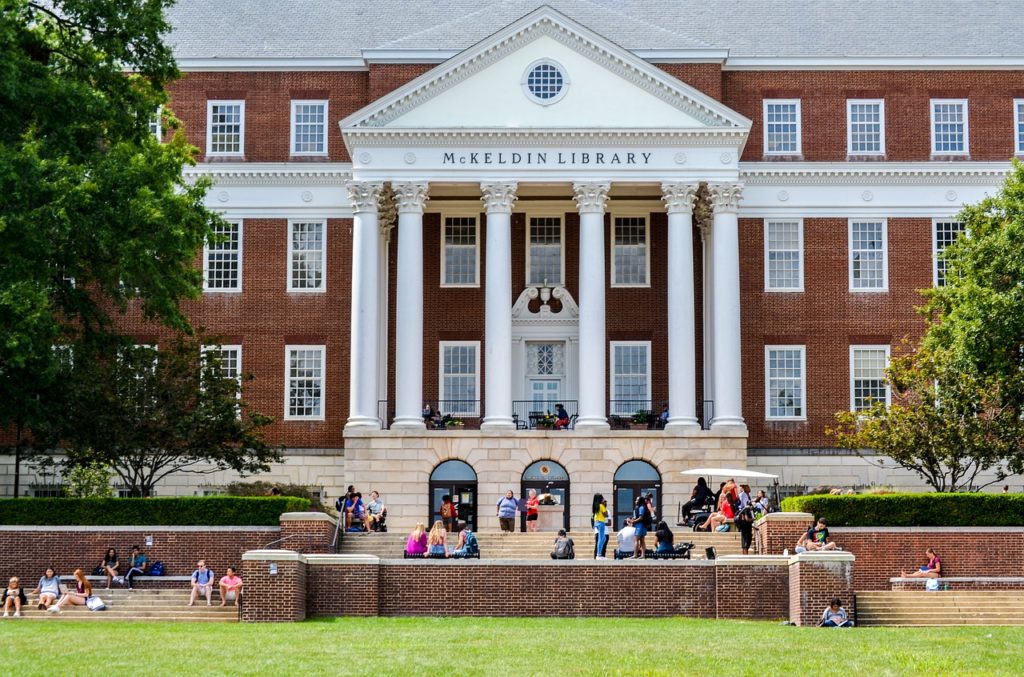
university of maryland campus library

Opportunities for Improvement

Despite these efforts and the many students and staff who do care, the campus recycling attitude is far from perfect. It can be hard, however, with a student body as large as UMD’s over 30,000 students to ensure universal recycling. UMD’s recycling rate was 46.5% in 2019, as compared to the US average of 34%, which is good but not 100%. There are multiple recycling bins in each building that provide the opportunity to recycle whenever necessary which always comes along with signage as to what should and should not be recycled. 

The campus is making an effort to increase composting availability as there are currently only 25 composting locations on campus. While 25 is quite a large number, on a campus that covers 1,340 acres, it is not enough to make compost convenient and accessible. In fact, I think I have only ever seen one or two bins. The number of compost locations will continue to increase in the coming years, but it is a good start. Interestingly enough, the compost used at our on-campus farm comes from the compost facility our campus compost is brought to.

University Department Initiatives

Dining services is possibly UMD’s greatest contributor to what makes UMD a more green campus than many other universities. When I first arrived on campus as a freshman, I was confused by the lack of trash cans in the dining hall. There weren’t even trash cans near the exits. It seemed very weird to me that I could not throw away napkins after finishing my lunch. Instead, the students just placed them on top of their plates and put them on the conveyor belt that disappeared back into the kitchen. This was always something I wondered about and since I had direct contact with the dining team because of my allergies, so I eventually asked what the reason for this was. What they told me was that the trash cans had been removed to reduce waste so the dining team would get to control all the leftovers and trash to compost as well as separate the trash into the correct categories. 

Most departments within the university have a sustainability team that works specifically on improving their environmental impact. These departments have the opportunity to earn certifications for their level of environmental sustainability. I work at the Clarice Smith Performing Arts Center as an usher and our department has a silver level certification, the second-highest. We do not use disposable plastics within the office and have instead replaced them with utensils that are washed by us. We bring out recycling boxes for playbills at the end of every performance so that they can be used at the subsequent performances of the show. These are specific examples, but they are a representation of the way sustainability is viewed as an effort that every part of the university contributes to. 

image of university of maryland campus lawn

Ways to Get Involved

There are over 25 environmentally-focused on-campus student groups that are constantly working to create innovative solutions to the remaining problems with the university’s environmental impact. acClimate is an organization dedicated to advocating for “equitable, science-based environmental policy” which ensures that students can contribute to progressive climate policy. Green Roots aims to promote sustainable agriculture on campus and beyond through the use of hydroponics and aquaponics. The food grown through their efforts is distributed to the local community. Beyond growing food, Green Roots also educates the public on these sustainable agriculture practices. 

By far the most impressive student environmental initiative to have ever been started at UMD is the Food Recovery Network. The group recovers left-over food from the dining halls and sports games to donate to hungry people in the DC area. In 2011, four UMD students started this initiative and it has now spread to 230 schools, recovered 3.9 million pounds of food, donated 3.2 million meals, and prevented 7.4 million pounds in carbon dioxide emissions. This specific initiative makes me most proud to be a UMD student as far as the environment is concerned. I have seen the enormous amount of food we go through every day in the dining hall and there is no reason that food should ever be thrown away when it can be donated to those in need.

UMD is truly a campus dedicated to protecting the environment and I am proud to be a part of that. I think both the university’s administration and the students are working to prevent climate change and ensure that the university is sustainable. However, there is always more that can be done. I encourage other students to get involved on campus within existing environmental organizations or even create new ones! Any area of study from public policy to the performing arts to the sciences has a role to play in promoting environmental sustainability and waste reduction. As students, investing time in sustainable practices now will create a better future for us and generations to come. We have the opportunity to do right by our planet so we should all reduce, reuse, recycle, and get involved.

Filed Under: Live, Make, Recent

7 Ways To Celebrate World Planting Day

October 22, 2020 by Cassandra Townsend 11 Comments

Did you know there’s an entire day dedicated to planting around the globe? I don’t mean Earth Day or Arbor Day, but a completely separate holiday known as World Planting Day. It’s dedicated to planting in whatever capacity you can, from planting a garden, to helping an organization, or even just spreading awareness about the importance of plants.

Here are a few ways to celebrate World Planting Day:

Plant a tree! 

World Planting Day falls at the perfect time to plant a tree, according to Growing a Greener World: the fall! They even offer a guide on how exactly to plant a tree, including how deep to dig, when to water, and when to step back. Additionally, a single mature tree can capture 48 pounds of CO2 a year, and an acre can capture double your car’s output in a year. 

Grow a garden. 

Make sure to pick a spot with lots of sun and good soil. You can even start a garden box if the natural soil around your yard isn’t good, or if you don’t have a yard. As a bonus, you’ll save money on groceries, reduce your carbon footprint as the food won’t travel as far, help replenish nutrients in the soil, and help out the bees. It can also help your physical health, your mental health, and maybe help relationships grow stronger. The Old Farmer’s Almanac has a great guide for beginners. 

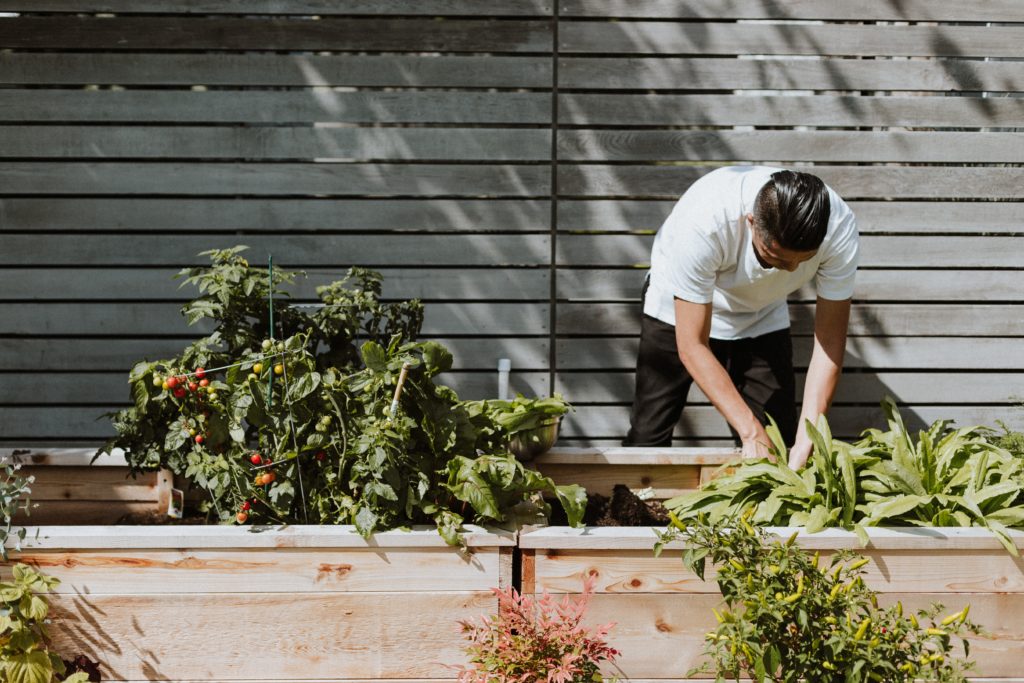
man gardening

Join a community garden.

Don’t have the yard space for a personal garden? No problem. There are plots of land in many communities where you can garden alongside your fellow neighbors. To your local community garden, do a quick internet search and a few should pop up. Plus, there are a lot of benefits to the community, like increased accessibility to healthier food, skill-building, improvement of social wellbeing, decreased violence, and community building. 

Help plant a Trillion Trees.

Trillion Trees is an organization whose goal is to end global deforestation one tree at a time. They plan to do this not only through planting trees, but also reducing deforestation, improving protections of forests, and advancing restoration. You can donate to them directly, or get in touch and see how you can help more specifically with any of their programs. 

Use Ecosia as your search engine. 

Think about how many times you Google a word or a question each day. What if every search you made helped plant a tree? With Ecosia, you’ll do exactly that! This search engine uses their profits to plant trees, and their servers are run on renewable energy. So far, they’ve planted over 110 million trees around the globe. Each search you make also removes 1kg of CO2 from the atmosphere. Don’t believe it? Ecosia shares their financial report with the public every month, so you can see exactly where the money goes and view the funded projects.

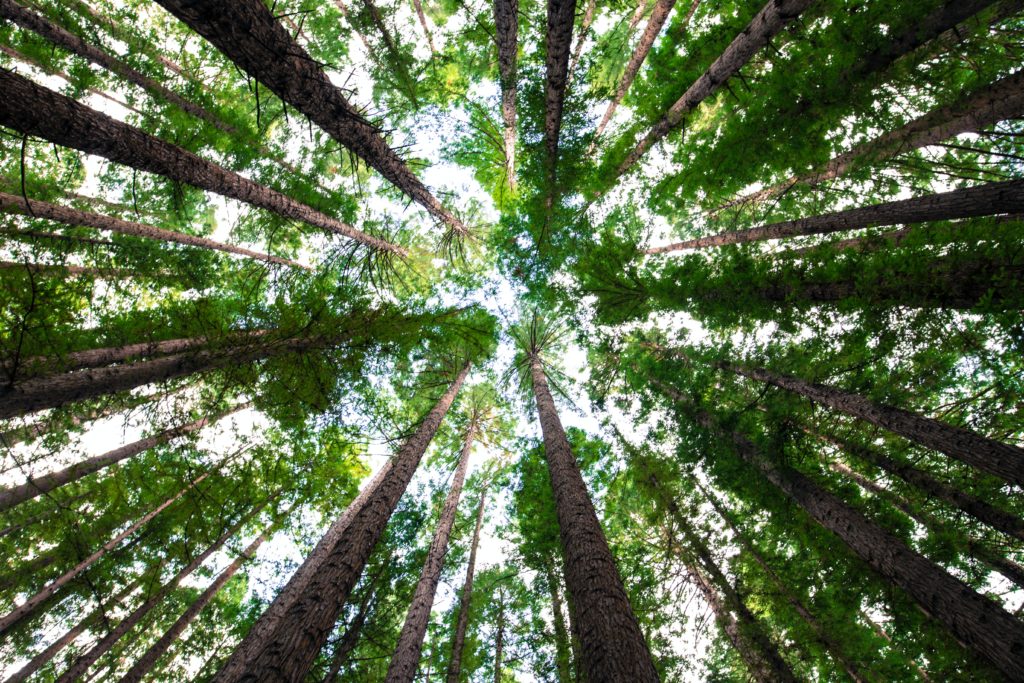
looking up at trees from the forest floor

Bank with Good Money

Business for good is good business, and the folks over at Good Money are putting that into practice (and helping you do the same!). Through their partnership with Rainforest Trust, they help protect over 300,000 acres of the Amazon by funding the land titling process that puts land back in the hands of indigenous communities. With every purchase you make through Good Money, you help fund land titles for 484 square feet of indigenous land,, translating to about 10 trees and 133 animals. They also use 50% of their profits to fund activism for social and climate justice. For those of us nervous about banking, don’t worry, they’re FDIC insured. 

Make a donation:

If nothing else, there are tons of organizations you can donate to. Here’s a few: 

  • Amazonas Sustainable Foundation, who support communities across the Amazon. 
  • American Farmland Trust, who encourage environmentally friendly farming practice and support local farmers. 
  • The Land Institute, who work to make current agricultural practices more sustainable. 

Why Plants Are Important Bees-ness 

Plants are the base of everything around us: the wood our houses and furniture are made of, the medicine we take, the food we eat, the fuel we use for heat and in our cars, the air we breathe. We would not exist in the current capacity without plants. 

Through photosynthesis, plants put out the oxygen we need to breathe. They are also carbon “sinks”, meaning they absorb greenhouse emissions like carbon dioxide, while still secreting oxygen. They also return nutrients to the soil and surrounding environment for other plants to use when they decompose. We compost to use this to our advantage in gardens, helping continue the cycle. 

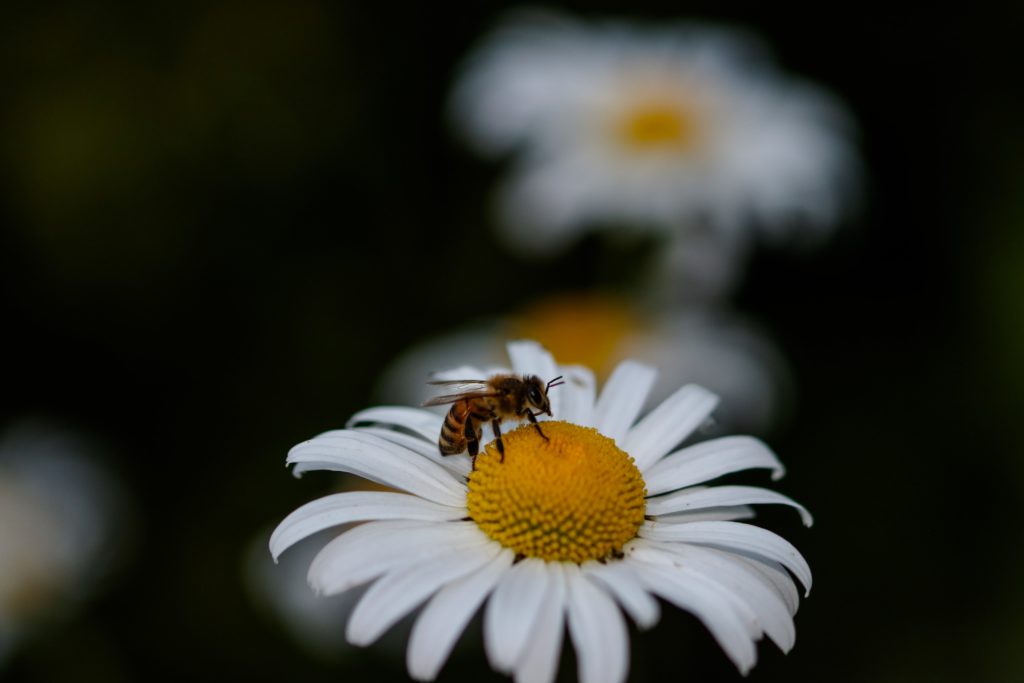
bee on daisy

The cycle can veer off from there, in several directions. Some animals eat plants, such as cows, and some animals, such as birds eat insects which gain nutrients through the soil. We eat plants, and we eat the animals that eat plants. We consume products like honey, from pollinators that allow plants to grow, such as bees, and pollinators are just as important. Without them, we wouldn’t have plants like we do now; any plant that flowers needs pollinators to grow and reproduce. This includes tomatoes, blueberries, apples, broccoli, and countless others.

We have a duty to this planet we call home, to protect it and it’s resources. But human activity, through climate change, deforestation, and some agricultural practices, is hurting plant life around the globe. Here’s how you can help and celebrate World Planting Day. 

At the end of the day, World Planting Day is just a single day out of the year, while the actions inspired by it can impact a lifetime (of a plant, and humans). So, take an action, take a stand, and make some change.

Filed Under: Eat, Recent

10 Ways To Cut Plastic Out Of Your Life

October 21, 2020 by Caitlin Fields Leave a Comment

Single-use plastics are exactly what they sound like — products made to be disposed of immediately after one use. They are generally made from chemicals derived through fossil-fuels, with plastic specifically being a mix of synthetic polymers (substances made through repeated chemical reactions). Common types of plastics that fall into this category are non-reusable water bottles and caps, food wrappers, straws, cup lids, and plastic bags.

You can help fight pollution caused by single-use plastics. Here are ten ways to cute plastic out of your life.

1. Skip straws or go for non-plastic options.

About 500,000 straws are used every day throughout the world! There are many alternatives to plastic, such as cardboard, glass, metal, and bamboo. While at restaurants, tell the waiter you don’t need straws before they put them on the table — once they’ve touched the surface, many places are required to throw them out whether they were used or not! Avoid plastic straws whenever possible, unless necessary due to disability.

via GIPHY

2. Get a reusable water bottle.

Humans buy roughly 1,000,000 plastic bottles every minute, but less than 25% of them are recycled after use (in the U.S.). By getting a reusable water bottle, each person alone can save 156 plastic bottles from entering landfills each year! If that’s not an option, many places offer outdoor water fountains for public use. There are countless options for reusable water bottles – every price, size, and style. Why not get one that matches your personal aesthetic?

via GIPHY

3. Use a mug for your daily dose of caffeine.

A lot of restaurants and breakfast chains will actually offer discounts if you bring in a reusable mug for your drinks. If you don’t feel like carrying one around, try a collapsible version (these can be found at many retail locations).

via GIPHY

4. Buy reusable grocery bags.

This is a big one! The average family in the U.S. goes through about 1,500 plastic shopping bags each year. It takes at least 500 years for a single plastic bag to “degrade” in a landfill, and the average person only uses them for 12 minutes. In addition to that, plastic bags do not actually degrade, but rather photodegrade, meaning they just break down into smaller pieces that still add toxicity to the environment over time. This also applies to non-compostable produce and meat bags found in your local grocery store. By spending a couple of dollars to get reusable bags, you save the environment from centuries of trouble!

via GIPHY

5. Bring your own containers to restaurants.

If you know you aren’t going to finish the meal in front of you, bring your own reusable “leftovers box.” Not only does this save the environment, but it also preserves your food longer depending on the material of the container you use. Don’t let all those reusable containers collect dust in the back of your cabinet. Keep a “to go” kit in your car for all future leftovers.

via GIPHY

6. Cut out that cutlery.

Single-use forks, spoons, and knives are always circulating in the environment, and since they’re so small, they can cause big problems! Try getting a small set of reusable utensils to carry around with you (I personally have a kit that has a fork, knife, spoon, and chopsticks — plus it’s almost as small as my phone!).

via GIPHY

7. Buy soda without “rings.”

If possible, buy a version where the plastic rings are not used or are compostable. If you ever see these “six-pack rings” in the environment (especially the beach, where they can cause major harm to marine life), make sure to cut them up and dispose of them properly. The turtles will thank you!

via GIPHY

8. Pack your school/work lunch in a reusable container.

The average family in the U.S. uses 500 ziplock bags per year. While these bags are recyclable, most people just throw them in the trash, especially if they are covered in lunch remains! The best thing to do is bring your own container (much like you would to a restaurant as mentioned above) and wash it out each time. You can also get reusable ziplock bag alternatives that are made to keep your food fresh and your carbon footprint small!

via GIPHY

9. Drink from glass, not plastic.

While plastic water bottles can be recycled, they can actually only go through this process once or twice before they have to be thrown out. Glass, on the other hand, can be recycled an infinite number of times! If that weren’t reason enough, glass is known for being more hygienic for the consumer, and preserves the intended flavor of the drink much better than the plastic alternative.

via GIPHY

10. Go for a mint instead!

Did you know that when you’re chewing gum, you’re actually likely eating plastic? The base for most chewing gums is a mixture of plastic and other chemicals that could negatively impact your health. These ingredients take up a whopping 30% of the entire gum recipe! Now think of every piece of gum you’ve seen littering the sidewalks, stuck on furniture, and slowly covering the world piece by piece…that’s plastic! Keep a mint on you to avoid gum (and bad breath, too!).

via GIPHY


I hope you’ve found some easy ways to make a difference in your day-to-day life! Ever since looking into the situation at hand, I find myself reaching less and less for those plastic products, and more for the sustainable options that previously kept watch over the back of my cabinet. When we take action together, we can make a BIG difference in the future of our planet.

Filed Under: Recent

  • « Go to Previous Page
  • Page 1
  • Interim pages omitted …
  • Page 45
  • Page 46
  • Page 47
  • Page 48
  • Page 49
  • Interim pages omitted …
  • Page 54
  • Go to Next Page »

Primary Sidebar

Recent Posts

  • PLANET HOME Announces $1 Million Tough Tech Prize at Inaugural Gala During Tough Tech Week
  • Planet Home and DataEnergy are solving the Green Computing Dilemma with Renewable AI Infrastructure
  • The Great AI Scale-Up: Balancing Compute Power with Planetary Boundaries
  • The Algorithm’s Bargain: Is AI Really for Good?
  • Code, Culture, and Creation: How AI is Remixing Entertainment’s DNA

Recent Comments

  • Liam Jacobs on Fricken’ Flying Taxis: The Future of Travel is Closer Than You Think
  • Izabella Bauer on The Pressing Plastic Problem
  • Broderick Ruiz on The Pressing Plastic Problem
  • Cherish Velez on The Pressing Plastic Problem
  • Anika Scott on The Pressing Plastic Problem

Archives

  • November 2025
  • April 2025
  • February 2025
  • January 2025
  • June 2022
  • April 2022
  • March 2022
  • February 2022
  • January 2022
  • December 2021
  • November 2021
  • October 2021
  • September 2021
  • August 2021
  • July 2021
  • June 2021
  • May 2021
  • April 2021
  • March 2021
  • February 2021
  • January 2021
  • December 2020
  • November 2020
  • October 2020
  • September 2020
  • August 2020
  • July 2020

Categories

  • AI
  • Community
  • Eat
  • energy
  • Featured
  • Live
  • Make
  • Move
  • Network
  • Press
  • Recent
  • Solutionist 100
  • Solutionists Making Moves
  • Solutions

Meta

  • Log in
  • Entries feed
  • Comments feed
  • WordPress.org

Design

With an emphasis on typography, white space, and mobile-optimized design, your website will look absolutely breathtaking.

Learn more about design.

TRENDING NOW

  • PLANET HOME Announces $1 Million Tough Tech Prize at Inaugural Gala During Tough Tech Week
  • Planet Home and DataEnergy are solving the Green Computing Dilemma with Renewable AI Infrastructure
  • The Great AI Scale-Up: Balancing Compute Power with Planetary Boundaries
  • The Algorithm’s Bargain: Is AI Really for Good?
  • Code, Culture, and Creation: How AI is Remixing Entertainment’s DNA

NEVER MISS A SOLUTION!

Sign up for our mailing list to stay up to date on planet saving solutions, news, and events from PLANET HOME!


BROWSE BY TAGS:

action carbon carbon emissions circular economy coronavirus eat education energy environment esg events fashion finance food green holidays industry lifestyle live make material science move music nature ocean oceans ocean stewardship planet plant-based plastic profile recycling s100 solutionist solutionists solutions sustainability tech technology tiktok transportation vegan waste water wildlife
Locations
Resources
Legal

Footer

Locations
Resources
Legal
  • Facebook
  • Instagram
  • LinkedIn
  • Pinterest
  • Twitter
  • YouTube
  • San Francisco
  • Los Angeles
  • New York
  • About PLANET HOME
  • Contact
  • Media
  • Employment
  • Terms of Use
  • Privacy Policy
  • Press

©2021 Planet Home. All rights reserved.
Use of and/or registration on any portion of this site constitutes acceptance of our User Agreement (updated 5/25/18) and Privacy Policy and Cookie Statement (updated 6/8/21) Your California Privacy Rights. The material on this site may not be reproduced, distributed, transmitted, cached or otherwise used except with the prior written permission of PH.

This website uses cookies to improve your experience. We'll assume you're ok with this, but you can opt-out if you wish. Cookie settingsACCEPT
Privacy & Cookies Policy

Privacy Overview

This website uses cookies to improve your experience while you navigate through the website. Out of these cookies, the cookies that are categorized as necessary are stored on your browser as they are essential for the working of basic functionalities of the website. We also use third-party cookies that help us analyze and understand how you use this website. These cookies will be stored in your browser only with your consent. You also have the option to opt-out of these cookies. But opting out of some of these cookies may have an effect on your browsing experience.
Necessary
Always Enabled
Necessary cookies are absolutely essential for the website to function properly. This category only includes cookies that ensures basic functionalities and security features of the website. These cookies do not store any personal information.
Non-necessary
Any cookies that may not be particularly necessary for the website to function and is used specifically to collect user personal data via analytics, ads, other embedded contents are termed as non-necessary cookies. It is mandatory to procure user consent prior to running these cookies on your website.
SAVE & ACCEPT